
Chapters
- Book Cover
- Chapter 1 - Introduction
- Chapter 2 - Getting Started
- Chapter 3 - Core Concepts
- Chapter 4 - Practical Examples
- Chapter 5 - Advanced Ideas
- Chapter 6 - Real Projects
- Chapter 7 - Best Practices
- Chapter 8 - Summary
- Chapter 9 - Foundations Review
- Chapter 10 - Building Confidence
- Chapter 11 - Key Principles
- Chapter 12 - Understanding Patterns
- Chapter 13 - Problem Solving
- Chapter 14 - Practical Skills
- Chapter 15 - Hands-On Practice
- Chapter 16 - Strategy and Planning
- Chapter 17 - Common Mistakes
- Chapter 18 - Improving Results
- Chapter 19 - Advanced Practice
- Chapter 20 - Real Use Cases
- Chapter 21 - Tips and Techniques
- Chapter 22 - Guided Exercises
- Chapter 23 - Deep Understanding
- Chapter 24 - Applied Learning
- Chapter 25 - Workflow Mastery
- Chapter 26 - Expert Advice
- Chapter 27 - Project Expansion
- Chapter 28 - Final Practice
- Chapter 29 - Final Review
- Chapter 30 - Conclusion
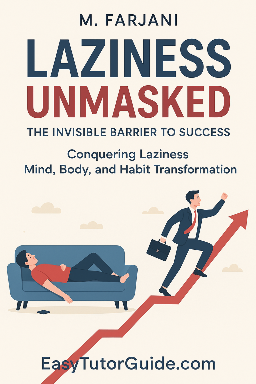
Beyond Boundless Ambitious Success: Unlock Limitless Growth, Discipline, and High Achievement

Beyond Boundless Ambitious Success reveals how powerful mindset, discipline, ambition, and strategic thinking can break limits, unlock potential, and drive continuous achievement in life, career, and personal growth.
Chapter 1 — Introduction
This chapter is about stopping the habit of waiting for a perfect moment. It is written for real days, not imaginary perfect ones.
The ordinary moment that changes everything
Mina was dealing with a notebook left unopened for months. From the outside it looked like a small issue, the kind people dismiss with “just get on with it.” But the private cost was larger: every postponed attempt turned into another reason to doubt tomorrow. The change did not begin with a dramatic speech. It began when Mina described the problem without exaggerating it. Try that yourself. Write what actually happens, when it happens, and what it costs. Avoid labels such as lazy or hopeless; they do not tell you what to do next. Clear descriptions create choices. That is our starting point for stopping the habit of waiting for a perfect moment.
Make the goal visible
The first useful distinction is between a wish and a behavior. You can wish to become more capable, generous, calm, or successful all day, and still reach bedtime with nothing changed. A behavior has a time, a place, and a visible result. For this chapter, the practical behavior is writing one honest sentence before breakfast. You are allowed to begin badly. You are not allowed to pretend that reading about the behavior is the same as doing it. Ask: if someone watched my next twenty-four hours, what could they point to as evidence? Choose one action you can honestly show, not an identity you hope other people will admire.
Spot the hidden trap
Notice the trap: the belief that ambition begins with a grand announcement. This mistake is attractive because it feels reasonable at the moment. There is almost always a polished explanation for postponing the awkward first attempt. But explanations are not measurements. When the trap appears, pause and ask two questions: “What am I protecting myself from feeling?” and “What is the smallest honest experiment I can complete anyway?” You might discover fear of embarrassment, boredom, uncertainty, or the possibility that your first result will disappoint you. All are normal experiences. None of them has to control your next decision. Give the feeling a name; then return to the work.
A twenty-minute working method
Let us make the idea concrete. Imagine you have twenty minutes, not an unlimited afternoon. Spend the first three minutes deciding what would count as finished. Spend fifteen minutes working on that one piece. Use the final two minutes to record what happened, including the obstacle that surprised you. This is not a magic formula; it is a way to expose your work to reality. When time is limited, good decisions become visible. If you keep restarting, lower the size of the task rather than lowering your honesty. A small completed experiment teaches more than an enormous plan protected from testing.
Protect the rest of your life
There is a quieter cost to ambition that people rarely discuss: relationships. If you make every conversation an interruption, the people around you will eventually experience your dream as their burden. Tell them what you are trying to do and how much time it actually needs. Ask what they need from you as well. Protect time for food, movement, sleep, and the people whose trust matters. None of these things guarantees success, but neglecting them can turn progress into damage. The goal is not to win one afternoon by losing the rest of your life. Make room for recovery on purpose.
Control and influence
Here is a practical checkpoint. Put a line down the middle of a page. On the left, write “what I controlled.” On the right, write “what I did not control.” A response from another person may belong on the right; whether you sent a clear message belongs on the left. An exam question may surprise you; preparing with difficult practice questions is under your influence. Keep returning attention to the left column. This does not mean pretending that circumstances are fair. It means refusing to waste all your energy negotiating with things that will not listen.
Adapt without giving up
Sometimes your plan fails for useful reasons. Perhaps writing one honest sentence before breakfast collides with a work shift, family responsibility, or an actual need for rest. That is evidence, not a verdict on your character. Move the action to a realistic time or cut it in half. Keep the purpose; adapt the method. The danger is changing plans so often that nothing is tested long enough to teach you anything. Decide in advance what counts as a fair trial: five days, two weeks, or a set number of attempts. Then review the results before redesigning everything.
Explain it to someone else
Imagine explaining this chapter to a friend who is skeptical. Do not say, “You have to believe in yourself.” That advice can sound empty when the person is exhausted. Instead, describe a specific sequence: notice a notebook left unopened for months; choose writing one honest sentence before breakfast; record what happened; adjust the next attempt. Invite them to try it with you for a week. A useful idea survives plain language. If your explanation needs impressive words to sound credible, check whether you understand it deeply enough. Success is often made of ordinary decisions carried out when no audience is watching.
Do not borrow somebody else’s clock
You also need a boundary around comparison. Someone else may be further ahead, have more time, better support, or years of experience you cannot see. Their results may teach you techniques, but they do not define the speed at which your life must move. Use comparison like a map, not a judge. Ask which habits you can reasonably borrow, which resources are missing, and which tradeoffs you refuse to make. Your task is to improve the quality of your next decision. It is not to manufacture a life that looks impressive in somebody else’s photographs.
A seven-day practice
Try a seven-day experiment. On day one, write a one-sentence aim connected to stopping the habit of waiting for a perfect moment. On days two through six, repeat writing one honest sentence before breakfast or a smaller version that fits. After each attempt, record one fact: duration, completion, error, or useful feedback. On day seven, review all five entries and choose one adjustment. Do not rate your entire worth on the result. The experiment measures a process. If you missed a day, write down what interfered and how you will make the next attempt easier. Your record should help you act, not become evidence in a private trial against yourself.
What this can become
Now look at the longer horizon. Suppose this practice becomes part of the next three months. What will it make possible? Maybe a better conversation, a finished piece of work, a steadier skill, or a decision you once avoided. Be specific but humble about the outcome. There is no universal timetable, and no honest writer can promise that your effort will produce every result you desire. What you can build is a repeatable way to notice, attempt, learn, and adjust. That process makes ambition less mysterious and more workable, especially on unremarkable days when enthusiasm has gone quiet.
The conversation you should have
If you share a home, team, or responsibility with other people, explain your plan in plain language. You might say: “I am working on stopping the habit of waiting for a perfect moment. I want to test writing one honest sentence before breakfast. Could we agree on a realistic time for it, and can you tell me what this change affects for you?” Listen to the answer. If the request is inconvenient, negotiate instead of declaring your goal more important than everything else. Your ambition becomes stronger when you can tell the truth about its costs. A promise made in conversation is not proof by itself. Follow up through reliable action, and admit quickly when you need to change the agreement.
Quick Questions — answer these in a list
- What does stopping the habit of waiting for a perfect moment mean in your actual life?
- When did the belief that ambition begins with a grand announcement last influence a decision?
- What evidence would show that writing one honest sentence before breakfast is helping?
- What is one boundary you must protect?
- Who can give you honest feedback without turning the work into a competition?
- what will you do when the next attempt feels ordinary, repetitive, or uncomfortable?
Keep your answers short, honest, and useful. No fancy speech required.
A closing promise
Mina did not need to become a different person to begin. The useful change was smaller: one honest description, one specific action, and a willingness to learn from the result. You can do the same with stopping the habit of waiting for a perfect moment. Keep your standards for honesty high and your entry cost low. Tomorrow, you will not need to remember every paragraph here. Remember the one decision you can make with the time and resources available. Make it, notice the result, and begin again. That is how a large ambition earns a place in daily life.
Chapter 2 — Getting Started
This chapter is about choosing a first action small enough to repeat. It is written for real days, not imaginary perfect ones.
The ordinary moment that changes everything
Daniel was dealing with an abandoned evening language class. From the outside it looked like a small issue, the kind people dismiss with “just get on with it.” But the private cost was larger: every postponed attempt turned into another reason to doubt tomorrow. The change did not begin with a dramatic speech. It began when Daniel described the problem without exaggerating it. Try that yourself. Write what actually happens, when it happens, and what it costs. Avoid labels such as lazy or hopeless; they do not tell you what to do next. Clear descriptions create choices. That is our starting point for choosing a first action small enough to repeat.
Make the goal visible
The first useful distinction is between a wish and a behavior. You can wish to become more capable, generous, calm, or successful all day, and still reach bedtime with nothing changed. A behavior has a time, a place, and a visible result. For this chapter, the practical behavior is studying ten minutes after dinner. You are allowed to begin badly. You are not allowed to pretend that reading about the behavior is the same as doing it. Ask: if someone watched my next twenty-four hours, what could they point to as evidence? Choose one action you can honestly show, not an identity you hope other people will admire.
Spot the hidden trap
Notice the trap: the urge to purchase equipment instead of practicing. This mistake is attractive because it feels reasonable at the moment. There is almost always a polished explanation for postponing the awkward first attempt. But explanations are not measurements. When the trap appears, pause and ask two questions: “What am I protecting myself from feeling?” and “What is the smallest honest experiment I can complete anyway?” You might discover fear of embarrassment, boredom, uncertainty, or the possibility that your first result will disappoint you. All are normal experiences. None of them has to control your next decision. Give the feeling a name; then return to the work.
A twenty-minute working method
Let us make the idea concrete. Imagine you have twenty minutes, not an unlimited afternoon. Spend the first three minutes deciding what would count as finished. Spend fifteen minutes working on that one piece. Use the final two minutes to record what happened, including the obstacle that surprised you. This is not a magic formula; it is a way to expose your work to reality. When time is limited, good decisions become visible. If you keep restarting, lower the size of the task rather than lowering your honesty. A small completed experiment teaches more than an enormous plan protected from testing.
Protect the rest of your life
There is a quieter cost to ambition that people rarely discuss: relationships. If you make every conversation an interruption, the people around you will eventually experience your dream as their burden. Tell them what you are trying to do and how much time it actually needs. Ask what they need from you as well. Protect time for food, movement, sleep, and the people whose trust matters. None of these things guarantees success, but neglecting them can turn progress into damage. The goal is not to win one afternoon by losing the rest of your life. Make room for recovery on purpose.
Control and influence
Here is a practical checkpoint. Put a line down the middle of a page. On the left, write “what I controlled.” On the right, write “what I did not control.” A response from another person may belong on the right; whether you sent a clear message belongs on the left. An exam question may surprise you; preparing with difficult practice questions is under your influence. Keep returning attention to the left column. This does not mean pretending that circumstances are fair. It means refusing to waste all your energy negotiating with things that will not listen.
Adapt without giving up
Sometimes your plan fails for useful reasons. Perhaps studying ten minutes after dinner collides with a work shift, family responsibility, or an actual need for rest. That is evidence, not a verdict on your character. Move the action to a realistic time or cut it in half. Keep the purpose; adapt the method. The danger is changing plans so often that nothing is tested long enough to teach you anything. Decide in advance what counts as a fair trial: five days, two weeks, or a set number of attempts. Then review the results before redesigning everything.
Explain it to someone else
Imagine explaining this chapter to a friend who is skeptical. Do not say, “You have to believe in yourself.” That advice can sound empty when the person is exhausted. Instead, describe a specific sequence: notice an abandoned evening language class; choose studying ten minutes after dinner; record what happened; adjust the next attempt. Invite them to try it with you for a week. A useful idea survives plain language. If your explanation needs impressive words to sound credible, check whether you understand it deeply enough. Success is often made of ordinary decisions carried out when no audience is watching.
Do not borrow somebody else’s clock
You also need a boundary around comparison. Someone else may be further ahead, have more time, better support, or years of experience you cannot see. Their results may teach you techniques, but they do not define the speed at which your life must move. Use comparison like a map, not a judge. Ask which habits you can reasonably borrow, which resources are missing, and which tradeoffs you refuse to make. Your task is to improve the quality of your next decision. It is not to manufacture a life that looks impressive in somebody else’s photographs.
A seven-day practice
Try a seven-day experiment. On day one, write a one-sentence aim connected to choosing a first action small enough to repeat. On days two through six, repeat studying ten minutes after dinner or a smaller version that fits. After each attempt, record one fact: duration, completion, error, or useful feedback. On day seven, review all five entries and choose one adjustment. Do not rate your entire worth on the result. The experiment measures a process. If you missed a day, write down what interfered and how you will make the next attempt easier. Your record should help you act, not become evidence in a private trial against yourself.
What this can become
Now look at the longer horizon. Suppose this practice becomes part of the next three months. What will it make possible? Maybe a better conversation, a finished piece of work, a steadier skill, or a decision you once avoided. Be specific but humble about the outcome. There is no universal timetable, and no honest writer can promise that your effort will produce every result you desire. What you can build is a repeatable way to notice, attempt, learn, and adjust. That process makes ambition less mysterious and more workable, especially on unremarkable days when enthusiasm has gone quiet.
The conversation you should have
If you share a home, team, or responsibility with other people, explain your plan in plain language. You might say: “I am working on choosing a first action small enough to repeat. I want to test studying ten minutes after dinner. Could we agree on a realistic time for it, and can you tell me what this change affects for you?” Listen to the answer. If the request is inconvenient, negotiate instead of declaring your goal more important than everything else. Your ambition becomes stronger when you can tell the truth about its costs. A promise made in conversation is not proof by itself. Follow up through reliable action, and admit quickly when you need to change the agreement.
Quick Questions — answer these in a list
- What does choosing a first action small enough to repeat mean in your actual life?
- When did the urge to purchase equipment instead of practicing last influence a decision?
- What evidence would show that studying ten minutes after dinner is helping?
- What is one boundary you must protect?
- Who can give you honest feedback without turning the work into a competition?
- what will you do when the next attempt feels ordinary, repetitive, or uncomfortable?
Keep your answers short, honest, and useful. No fancy speech required.
A closing promise
Daniel did not need to become a different person to begin. The useful change was smaller: one honest description, one specific action, and a willingness to learn from the result. You can do the same with choosing a first action small enough to repeat. Keep your standards for honesty high and your entry cost low. Tomorrow, you will not need to remember every paragraph here. Remember the one decision you can make with the time and resources available. Make it, notice the result, and begin again. That is how a large ambition earns a place in daily life.
Chapter 3 — Core Concepts
This chapter is about understanding effort, direction, recovery and feedback. It is written for real days, not imaginary perfect ones.
The ordinary moment that changes everything
Roya was dealing with a crowded schedule with no real progress. From the outside it looked like a small issue, the kind people dismiss with “just get on with it.” But the private cost was larger: every postponed attempt turned into another reason to doubt tomorrow. The change did not begin with a dramatic speech. It began when Roya described the problem without exaggerating it. Try that yourself. Write what actually happens, when it happens, and what it costs. Avoid labels such as lazy or hopeless; they do not tell you what to do next. Clear descriptions create choices. That is our starting point for understanding effort, direction, recovery and feedback.
Make the goal visible
The first useful distinction is between a wish and a behavior. You can wish to become more capable, generous, calm, or successful all day, and still reach bedtime with nothing changed. A behavior has a time, a place, and a visible result. For this chapter, the practical behavior is choosing one measurable weekly outcome. You are allowed to begin badly. You are not allowed to pretend that reading about the behavior is the same as doing it. Ask: if someone watched my next twenty-four hours, what could they point to as evidence? Choose one action you can honestly show, not an identity you hope other people will admire.
Spot the hidden trap
Notice the trap: confusing busyness with achievement. This mistake is attractive because it feels reasonable at the moment. There is almost always a polished explanation for postponing the awkward first attempt. But explanations are not measurements. When the trap appears, pause and ask two questions: “What am I protecting myself from feeling?” and “What is the smallest honest experiment I can complete anyway?” You might discover fear of embarrassment, boredom, uncertainty, or the possibility that your first result will disappoint you. All are normal experiences. None of them has to control your next decision. Give the feeling a name; then return to the work.
A twenty-minute working method
Let us make the idea concrete. Imagine you have twenty minutes, not an unlimited afternoon. Spend the first three minutes deciding what would count as finished. Spend fifteen minutes working on that one piece. Use the final two minutes to record what happened, including the obstacle that surprised you. This is not a magic formula; it is a way to expose your work to reality. When time is limited, good decisions become visible. If you keep restarting, lower the size of the task rather than lowering your honesty. A small completed experiment teaches more than an enormous plan protected from testing.
Protect the rest of your life
There is a quieter cost to ambition that people rarely discuss: relationships. If you make every conversation an interruption, the people around you will eventually experience your dream as their burden. Tell them what you are trying to do and how much time it actually needs. Ask what they need from you as well. Protect time for food, movement, sleep, and the people whose trust matters. None of these things guarantees success, but neglecting them can turn progress into damage. The goal is not to win one afternoon by losing the rest of your life. Make room for recovery on purpose.
Control and influence
Here is a practical checkpoint. Put a line down the middle of a page. On the left, write “what I controlled.” On the right, write “what I did not control.” A response from another person may belong on the right; whether you sent a clear message belongs on the left. An exam question may surprise you; preparing with difficult practice questions is under your influence. Keep returning attention to the left column. This does not mean pretending that circumstances are fair. It means refusing to waste all your energy negotiating with things that will not listen.
Adapt without giving up
Sometimes your plan fails for useful reasons. Perhaps choosing one measurable weekly outcome collides with a work shift, family responsibility, or an actual need for rest. That is evidence, not a verdict on your character. Move the action to a realistic time or cut it in half. Keep the purpose; adapt the method. The danger is changing plans so often that nothing is tested long enough to teach you anything. Decide in advance what counts as a fair trial: five days, two weeks, or a set number of attempts. Then review the results before redesigning everything.
Explain it to someone else
Imagine explaining this chapter to a friend who is skeptical. Do not say, “You have to believe in yourself.” That advice can sound empty when the person is exhausted. Instead, describe a specific sequence: notice a crowded schedule with no real progress; choose choosing one measurable weekly outcome; record what happened; adjust the next attempt. Invite them to try it with you for a week. A useful idea survives plain language. If your explanation needs impressive words to sound credible, check whether you understand it deeply enough. Success is often made of ordinary decisions carried out when no audience is watching.
Do not borrow somebody else’s clock
You also need a boundary around comparison. Someone else may be further ahead, have more time, better support, or years of experience you cannot see. Their results may teach you techniques, but they do not define the speed at which your life must move. Use comparison like a map, not a judge. Ask which habits you can reasonably borrow, which resources are missing, and which tradeoffs you refuse to make. Your task is to improve the quality of your next decision. It is not to manufacture a life that looks impressive in somebody else’s photographs.
A seven-day practice
Try a seven-day experiment. On day one, write a one-sentence aim connected to understanding effort, direction, recovery and feedback. On days two through six, repeat choosing one measurable weekly outcome or a smaller version that fits. After each attempt, record one fact: duration, completion, error, or useful feedback. On day seven, review all five entries and choose one adjustment. Do not rate your entire worth on the result. The experiment measures a process. If you missed a day, write down what interfered and how you will make the next attempt easier. Your record should help you act, not become evidence in a private trial against yourself.
What this can become
Now look at the longer horizon. Suppose this practice becomes part of the next three months. What will it make possible? Maybe a better conversation, a finished piece of work, a steadier skill, or a decision you once avoided. Be specific but humble about the outcome. There is no universal timetable, and no honest writer can promise that your effort will produce every result you desire. What you can build is a repeatable way to notice, attempt, learn, and adjust. That process makes ambition less mysterious and more workable, especially on unremarkable days when enthusiasm has gone quiet.
The conversation you should have
If you share a home, team, or responsibility with other people, explain your plan in plain language. You might say: “I am working on understanding effort, direction, recovery and feedback. I want to test choosing one measurable weekly outcome. Could we agree on a realistic time for it, and can you tell me what this change affects for you?” Listen to the answer. If the request is inconvenient, negotiate instead of declaring your goal more important than everything else. Your ambition becomes stronger when you can tell the truth about its costs. A promise made in conversation is not proof by itself. Follow up through reliable action, and admit quickly when you need to change the agreement.
Quick Questions — answer these in a list
- What does understanding effort, direction, recovery and feedback mean in your actual life?
- When did confusing busyness with achievement last influence a decision?
- What evidence would show that choosing one measurable weekly outcome is helping?
- What is one boundary you must protect?
- Who can give you honest feedback without turning the work into a competition?
- what will you do when the next attempt feels ordinary, repetitive, or uncomfortable?
Keep your answers short, honest, and useful. No fancy speech required.
A closing promise
Roya did not need to become a different person to begin. The useful change was smaller: one honest description, one specific action, and a willingness to learn from the result. You can do the same with understanding effort, direction, recovery and feedback. Keep your standards for honesty high and your entry cost low. Tomorrow, you will not need to remember every paragraph here. Remember the one decision you can make with the time and resources available. Make it, notice the result, and begin again. That is how a large ambition earns a place in daily life.
Chapter 4 — Practical Examples
This chapter is about turning vague goals into observable behavior. It is written for real days, not imaginary perfect ones.
The ordinary moment that changes everything
Alex was dealing with a plan to become healthier that never became a walk. From the outside it looked like a small issue, the kind people dismiss with “just get on with it.” But the private cost was larger: every postponed attempt turned into another reason to doubt tomorrow. The change did not begin with a dramatic speech. It began when Alex described the problem without exaggerating it. Try that yourself. Write what actually happens, when it happens, and what it costs. Avoid labels such as lazy or hopeless; they do not tell you what to do next. Clear descriptions create choices. That is our starting point for turning vague goals into observable behavior.
Make the goal visible
The first useful distinction is between a wish and a behavior. You can wish to become more capable, generous, calm, or successful all day, and still reach bedtime with nothing changed. A behavior has a time, a place, and a visible result. For this chapter, the practical behavior is taking a fifteen-minute walk after lunch. You are allowed to begin badly. You are not allowed to pretend that reading about the behavior is the same as doing it. Ask: if someone watched my next twenty-four hours, what could they point to as evidence? Choose one action you can honestly show, not an identity you hope other people will admire.
Spot the hidden trap
Notice the trap: the fantasy that motivation must arrive first. This mistake is attractive because it feels reasonable at the moment. There is almost always a polished explanation for postponing the awkward first attempt. But explanations are not measurements. When the trap appears, pause and ask two questions: “What am I protecting myself from feeling?” and “What is the smallest honest experiment I can complete anyway?” You might discover fear of embarrassment, boredom, uncertainty, or the possibility that your first result will disappoint you. All are normal experiences. None of them has to control your next decision. Give the feeling a name; then return to the work.
A twenty-minute working method
Let us make the idea concrete. Imagine you have twenty minutes, not an unlimited afternoon. Spend the first three minutes deciding what would count as finished. Spend fifteen minutes working on that one piece. Use the final two minutes to record what happened, including the obstacle that surprised you. This is not a magic formula; it is a way to expose your work to reality. When time is limited, good decisions become visible. If you keep restarting, lower the size of the task rather than lowering your honesty. A small completed experiment teaches more than an enormous plan protected from testing.
Protect the rest of your life
There is a quieter cost to ambition that people rarely discuss: relationships. If you make every conversation an interruption, the people around you will eventually experience your dream as their burden. Tell them what you are trying to do and how much time it actually needs. Ask what they need from you as well. Protect time for food, movement, sleep, and the people whose trust matters. None of these things guarantees success, but neglecting them can turn progress into damage. The goal is not to win one afternoon by losing the rest of your life. Make room for recovery on purpose.
Control and influence
Here is a practical checkpoint. Put a line down the middle of a page. On the left, write “what I controlled.” On the right, write “what I did not control.” A response from another person may belong on the right; whether you sent a clear message belongs on the left. An exam question may surprise you; preparing with difficult practice questions is under your influence. Keep returning attention to the left column. This does not mean pretending that circumstances are fair. It means refusing to waste all your energy negotiating with things that will not listen.
Adapt without giving up
Sometimes your plan fails for useful reasons. Perhaps taking a fifteen-minute walk after lunch collides with a work shift, family responsibility, or an actual need for rest. That is evidence, not a verdict on your character. Move the action to a realistic time or cut it in half. Keep the purpose; adapt the method. The danger is changing plans so often that nothing is tested long enough to teach you anything. Decide in advance what counts as a fair trial: five days, two weeks, or a set number of attempts. Then review the results before redesigning everything.
Explain it to someone else
Imagine explaining this chapter to a friend who is skeptical. Do not say, “You have to believe in yourself.” That advice can sound empty when the person is exhausted. Instead, describe a specific sequence: notice a plan to become healthier that never became a walk; choose taking a fifteen-minute walk after lunch; record what happened; adjust the next attempt. Invite them to try it with you for a week. A useful idea survives plain language. If your explanation needs impressive words to sound credible, check whether you understand it deeply enough. Success is often made of ordinary decisions carried out when no audience is watching.
Do not borrow somebody else’s clock
You also need a boundary around comparison. Someone else may be further ahead, have more time, better support, or years of experience you cannot see. Their results may teach you techniques, but they do not define the speed at which your life must move. Use comparison like a map, not a judge. Ask which habits you can reasonably borrow, which resources are missing, and which tradeoffs you refuse to make. Your task is to improve the quality of your next decision. It is not to manufacture a life that looks impressive in somebody else’s photographs.
A seven-day practice
Try a seven-day experiment. On day one, write a one-sentence aim connected to turning vague goals into observable behavior. On days two through six, repeat taking a fifteen-minute walk after lunch or a smaller version that fits. After each attempt, record one fact: duration, completion, error, or useful feedback. On day seven, review all five entries and choose one adjustment. Do not rate your entire worth on the result. The experiment measures a process. If you missed a day, write down what interfered and how you will make the next attempt easier. Your record should help you act, not become evidence in a private trial against yourself.
What this can become
Now look at the longer horizon. Suppose this practice becomes part of the next three months. What will it make possible? Maybe a better conversation, a finished piece of work, a steadier skill, or a decision you once avoided. Be specific but humble about the outcome. There is no universal timetable, and no honest writer can promise that your effort will produce every result you desire. What you can build is a repeatable way to notice, attempt, learn, and adjust. That process makes ambition less mysterious and more workable, especially on unremarkable days when enthusiasm has gone quiet.
The conversation you should have
If you share a home, team, or responsibility with other people, explain your plan in plain language. You might say: “I am working on turning vague goals into observable behavior. I want to test taking a fifteen-minute walk after lunch. Could we agree on a realistic time for it, and can you tell me what this change affects for you?” Listen to the answer. If the request is inconvenient, negotiate instead of declaring your goal more important than everything else. Your ambition becomes stronger when you can tell the truth about its costs. A promise made in conversation is not proof by itself. Follow up through reliable action, and admit quickly when you need to change the agreement.
Quick Questions — answer these in a list
- What does turning vague goals into observable behavior mean in your actual life?
- When did the fantasy that motivation must arrive first last influence a decision?
- What evidence would show that taking a fifteen-minute walk after lunch is helping?
- What is one boundary you must protect?
- Who can give you honest feedback without turning the work into a competition?
- what will you do when the next attempt feels ordinary, repetitive, or uncomfortable?
Keep your answers short, honest, and useful. No fancy speech required.
A closing promise
Alex did not need to become a different person to begin. The useful change was smaller: one honest description, one specific action, and a willingness to learn from the result. You can do the same with turning vague goals into observable behavior. Keep your standards for honesty high and your entry cost low. Tomorrow, you will not need to remember every paragraph here. Remember the one decision you can make with the time and resources available. Make it, notice the result, and begin again. That is how a large ambition earns a place in daily life.
Chapter 5 — Advanced Ideas
This chapter is about working with complexity without worshipping it. It is written for real days, not imaginary perfect ones.
The ordinary moment that changes everything
Nadia was dealing with a difficult proposal with too many moving parts. From the outside it looked like a small issue, the kind people dismiss with “just get on with it.” But the private cost was larger: every postponed attempt turned into another reason to doubt tomorrow. The change did not begin with a dramatic speech. It began when Nadia described the problem without exaggerating it. Try that yourself. Write what actually happens, when it happens, and what it costs. Avoid labels such as lazy or hopeless; they do not tell you what to do next. Clear descriptions create choices. That is our starting point for working with complexity without worshipping it.
Make the goal visible
The first useful distinction is between a wish and a behavior. You can wish to become more capable, generous, calm, or successful all day, and still reach bedtime with nothing changed. A behavior has a time, a place, and a visible result. For this chapter, the practical behavior is drawing a one-page map of the next decision. You are allowed to begin badly. You are not allowed to pretend that reading about the behavior is the same as doing it. Ask: if someone watched my next twenty-four hours, what could they point to as evidence? Choose one action you can honestly show, not an identity you hope other people will admire.
Spot the hidden trap
Notice the trap: mistaking complicated language for deeper thinking. This mistake is attractive because it feels reasonable at the moment. There is almost always a polished explanation for postponing the awkward first attempt. But explanations are not measurements. When the trap appears, pause and ask two questions: “What am I protecting myself from feeling?” and “What is the smallest honest experiment I can complete anyway?” You might discover fear of embarrassment, boredom, uncertainty, or the possibility that your first result will disappoint you. All are normal experiences. None of them has to control your next decision. Give the feeling a name; then return to the work.
A twenty-minute working method
Let us make the idea concrete. Imagine you have twenty minutes, not an unlimited afternoon. Spend the first three minutes deciding what would count as finished. Spend fifteen minutes working on that one piece. Use the final two minutes to record what happened, including the obstacle that surprised you. This is not a magic formula; it is a way to expose your work to reality. When time is limited, good decisions become visible. If you keep restarting, lower the size of the task rather than lowering your honesty. A small completed experiment teaches more than an enormous plan protected from testing.
Protect the rest of your life
There is a quieter cost to ambition that people rarely discuss: relationships. If you make every conversation an interruption, the people around you will eventually experience your dream as their burden. Tell them what you are trying to do and how much time it actually needs. Ask what they need from you as well. Protect time for food, movement, sleep, and the people whose trust matters. None of these things guarantees success, but neglecting them can turn progress into damage. The goal is not to win one afternoon by losing the rest of your life. Make room for recovery on purpose.
Control and influence
Here is a practical checkpoint. Put a line down the middle of a page. On the left, write “what I controlled.” On the right, write “what I did not control.” A response from another person may belong on the right; whether you sent a clear message belongs on the left. An exam question may surprise you; preparing with difficult practice questions is under your influence. Keep returning attention to the left column. This does not mean pretending that circumstances are fair. It means refusing to waste all your energy negotiating with things that will not listen.
Adapt without giving up
Sometimes your plan fails for useful reasons. Perhaps drawing a one-page map of the next decision collides with a work shift, family responsibility, or an actual need for rest. That is evidence, not a verdict on your character. Move the action to a realistic time or cut it in half. Keep the purpose; adapt the method. The danger is changing plans so often that nothing is tested long enough to teach you anything. Decide in advance what counts as a fair trial: five days, two weeks, or a set number of attempts. Then review the results before redesigning everything.
Explain it to someone else
Imagine explaining this chapter to a friend who is skeptical. Do not say, “You have to believe in yourself.” That advice can sound empty when the person is exhausted. Instead, describe a specific sequence: notice a difficult proposal with too many moving parts; choose drawing a one-page map of the next decision; record what happened; adjust the next attempt. Invite them to try it with you for a week. A useful idea survives plain language. If your explanation needs impressive words to sound credible, check whether you understand it deeply enough. Success is often made of ordinary decisions carried out when no audience is watching.
Do not borrow somebody else’s clock
You also need a boundary around comparison. Someone else may be further ahead, have more time, better support, or years of experience you cannot see. Their results may teach you techniques, but they do not define the speed at which your life must move. Use comparison like a map, not a judge. Ask which habits you can reasonably borrow, which resources are missing, and which tradeoffs you refuse to make. Your task is to improve the quality of your next decision. It is not to manufacture a life that looks impressive in somebody else’s photographs.
A seven-day practice
Try a seven-day experiment. On day one, write a one-sentence aim connected to working with complexity without worshipping it. On days two through six, repeat drawing a one-page map of the next decision or a smaller version that fits. After each attempt, record one fact: duration, completion, error, or useful feedback. On day seven, review all five entries and choose one adjustment. Do not rate your entire worth on the result. The experiment measures a process. If you missed a day, write down what interfered and how you will make the next attempt easier. Your record should help you act, not become evidence in a private trial against yourself.
What this can become
Now look at the longer horizon. Suppose this practice becomes part of the next three months. What will it make possible? Maybe a better conversation, a finished piece of work, a steadier skill, or a decision you once avoided. Be specific but humble about the outcome. There is no universal timetable, and no honest writer can promise that your effort will produce every result you desire. What you can build is a repeatable way to notice, attempt, learn, and adjust. That process makes ambition less mysterious and more workable, especially on unremarkable days when enthusiasm has gone quiet.
The conversation you should have
If you share a home, team, or responsibility with other people, explain your plan in plain language. You might say: “I am working on working with complexity without worshipping it. I want to test drawing a one-page map of the next decision. Could we agree on a realistic time for it, and can you tell me what this change affects for you?” Listen to the answer. If the request is inconvenient, negotiate instead of declaring your goal more important than everything else. Your ambition becomes stronger when you can tell the truth about its costs. A promise made in conversation is not proof by itself. Follow up through reliable action, and admit quickly when you need to change the agreement.
Quick Questions — answer these in a list
- What does working with complexity without worshipping it mean in your actual life?
- When did mistaking complicated language for deeper thinking last influence a decision?
- What evidence would show that drawing a one-page map of the next decision is helping?
- What is one boundary you must protect?
- Who can give you honest feedback without turning the work into a competition?
- what will you do when the next attempt feels ordinary, repetitive, or uncomfortable?
Keep your answers short, honest, and useful. No fancy speech required.
A closing promise
Nadia did not need to become a different person to begin. The useful change was smaller: one honest description, one specific action, and a willingness to learn from the result. You can do the same with working with complexity without worshipping it. Keep your standards for honesty high and your entry cost low. Tomorrow, you will not need to remember every paragraph here. Remember the one decision you can make with the time and resources available. Make it, notice the result, and begin again. That is how a large ambition earns a place in daily life.
Chapter 6 — Real Projects
This chapter is about building something others can actually use. It is written for real days, not imaginary perfect ones.
The ordinary moment that changes everything
Omar was dealing with a half-built community reading club. From the outside it looked like a small issue, the kind people dismiss with “just get on with it.” But the private cost was larger: every postponed attempt turned into another reason to doubt tomorrow. The change did not begin with a dramatic speech. It began when Omar described the problem without exaggerating it. Try that yourself. Write what actually happens, when it happens, and what it costs. Avoid labels such as lazy or hopeless; they do not tell you what to do next. Clear descriptions create choices. That is our starting point for building something others can actually use.
Make the goal visible
The first useful distinction is between a wish and a behavior. You can wish to become more capable, generous, calm, or successful all day, and still reach bedtime with nothing changed. A behavior has a time, a place, and a visible result. For this chapter, the practical behavior is inviting three neighbors to a simple first session. You are allowed to begin badly. You are not allowed to pretend that reading about the behavior is the same as doing it. Ask: if someone watched my next twenty-four hours, what could they point to as evidence? Choose one action you can honestly show, not an identity you hope other people will admire.
Spot the hidden trap
Notice the trap: polishing a logo while avoiding the real launch. This mistake is attractive because it feels reasonable at the moment. There is almost always a polished explanation for postponing the awkward first attempt. But explanations are not measurements. When the trap appears, pause and ask two questions: “What am I protecting myself from feeling?” and “What is the smallest honest experiment I can complete anyway?” You might discover fear of embarrassment, boredom, uncertainty, or the possibility that your first result will disappoint you. All are normal experiences. None of them has to control your next decision. Give the feeling a name; then return to the work.
A twenty-minute working method
Let us make the idea concrete. Imagine you have twenty minutes, not an unlimited afternoon. Spend the first three minutes deciding what would count as finished. Spend fifteen minutes working on that one piece. Use the final two minutes to record what happened, including the obstacle that surprised you. This is not a magic formula; it is a way to expose your work to reality. When time is limited, good decisions become visible. If you keep restarting, lower the size of the task rather than lowering your honesty. A small completed experiment teaches more than an enormous plan protected from testing.
Protect the rest of your life
There is a quieter cost to ambition that people rarely discuss: relationships. If you make every conversation an interruption, the people around you will eventually experience your dream as their burden. Tell them what you are trying to do and how much time it actually needs. Ask what they need from you as well. Protect time for food, movement, sleep, and the people whose trust matters. None of these things guarantees success, but neglecting them can turn progress into damage. The goal is not to win one afternoon by losing the rest of your life. Make room for recovery on purpose.
Control and influence
Here is a practical checkpoint. Put a line down the middle of a page. On the left, write “what I controlled.” On the right, write “what I did not control.” A response from another person may belong on the right; whether you sent a clear message belongs on the left. An exam question may surprise you; preparing with difficult practice questions is under your influence. Keep returning attention to the left column. This does not mean pretending that circumstances are fair. It means refusing to waste all your energy negotiating with things that will not listen.
Adapt without giving up
Sometimes your plan fails for useful reasons. Perhaps inviting three neighbors to a simple first session collides with a work shift, family responsibility, or an actual need for rest. That is evidence, not a verdict on your character. Move the action to a realistic time or cut it in half. Keep the purpose; adapt the method. The danger is changing plans so often that nothing is tested long enough to teach you anything. Decide in advance what counts as a fair trial: five days, two weeks, or a set number of attempts. Then review the results before redesigning everything.
Explain it to someone else
Imagine explaining this chapter to a friend who is skeptical. Do not say, “You have to believe in yourself.” That advice can sound empty when the person is exhausted. Instead, describe a specific sequence: notice a half-built community reading club; choose inviting three neighbors to a simple first session; record what happened; adjust the next attempt. Invite them to try it with you for a week. A useful idea survives plain language. If your explanation needs impressive words to sound credible, check whether you understand it deeply enough. Success is often made of ordinary decisions carried out when no audience is watching.
Do not borrow somebody else’s clock
You also need a boundary around comparison. Someone else may be further ahead, have more time, better support, or years of experience you cannot see. Their results may teach you techniques, but they do not define the speed at which your life must move. Use comparison like a map, not a judge. Ask which habits you can reasonably borrow, which resources are missing, and which tradeoffs you refuse to make. Your task is to improve the quality of your next decision. It is not to manufacture a life that looks impressive in somebody else’s photographs.
A seven-day practice
Try a seven-day experiment. On day one, write a one-sentence aim connected to building something others can actually use. On days two through six, repeat inviting three neighbors to a simple first session or a smaller version that fits. After each attempt, record one fact: duration, completion, error, or useful feedback. On day seven, review all five entries and choose one adjustment. Do not rate your entire worth on the result. The experiment measures a process. If you missed a day, write down what interfered and how you will make the next attempt easier. Your record should help you act, not become evidence in a private trial against yourself.
What this can become
Now look at the longer horizon. Suppose this practice becomes part of the next three months. What will it make possible? Maybe a better conversation, a finished piece of work, a steadier skill, or a decision you once avoided. Be specific but humble about the outcome. There is no universal timetable, and no honest writer can promise that your effort will produce every result you desire. What you can build is a repeatable way to notice, attempt, learn, and adjust. That process makes ambition less mysterious and more workable, especially on unremarkable days when enthusiasm has gone quiet.
The conversation you should have
If you share a home, team, or responsibility with other people, explain your plan in plain language. You might say: “I am working on building something others can actually use. I want to test inviting three neighbors to a simple first session. Could we agree on a realistic time for it, and can you tell me what this change affects for you?” Listen to the answer. If the request is inconvenient, negotiate instead of declaring your goal more important than everything else. Your ambition becomes stronger when you can tell the truth about its costs. A promise made in conversation is not proof by itself. Follow up through reliable action, and admit quickly when you need to change the agreement.
Quick Questions — answer these in a list
- What does building something others can actually use mean in your actual life?
- When did polishing a logo while avoiding the real launch last influence a decision?
- What evidence would show that inviting three neighbors to a simple first session is helping?
- What is one boundary you must protect?
- Who can give you honest feedback without turning the work into a competition?
- what will you do when the next attempt feels ordinary, repetitive, or uncomfortable?
Keep your answers short, honest, and useful. No fancy speech required.
A closing promise
Omar did not need to become a different person to begin. The useful change was smaller: one honest description, one specific action, and a willingness to learn from the result. You can do the same with building something others can actually use. Keep your standards for honesty high and your entry cost low. Tomorrow, you will not need to remember every paragraph here. Remember the one decision you can make with the time and resources available. Make it, notice the result, and begin again. That is how a large ambition earns a place in daily life.
Chapter 7 — Best Practices
This chapter is about designing routines that survive ordinary days. It is written for real days, not imaginary perfect ones.
The ordinary moment that changes everything
Leila was dealing with a morning routine that collapses during busy weeks. From the outside it looked like a small issue, the kind people dismiss with “just get on with it.” But the private cost was larger: every postponed attempt turned into another reason to doubt tomorrow. The change did not begin with a dramatic speech. It began when Leila described the problem without exaggerating it. Try that yourself. Write what actually happens, when it happens, and what it costs. Avoid labels such as lazy or hopeless; they do not tell you what to do next. Clear descriptions create choices. That is our starting point for designing routines that survive ordinary days.
Make the goal visible
The first useful distinction is between a wish and a behavior. You can wish to become more capable, generous, calm, or successful all day, and still reach bedtime with nothing changed. A behavior has a time, a place, and a visible result. For this chapter, the practical behavior is using a minimum version of the routine. You are allowed to begin badly. You are not allowed to pretend that reading about the behavior is the same as doing it. Ask: if someone watched my next twenty-four hours, what could they point to as evidence? Choose one action you can honestly show, not an identity you hope other people will admire.
Spot the hidden trap
Notice the trap: treating one missed day as the end of progress. This mistake is attractive because it feels reasonable at the moment. There is almost always a polished explanation for postponing the awkward first attempt. But explanations are not measurements. When the trap appears, pause and ask two questions: “What am I protecting myself from feeling?” and “What is the smallest honest experiment I can complete anyway?” You might discover fear of embarrassment, boredom, uncertainty, or the possibility that your first result will disappoint you. All are normal experiences. None of them has to control your next decision. Give the feeling a name; then return to the work.
A twenty-minute working method
Let us make the idea concrete. Imagine you have twenty minutes, not an unlimited afternoon. Spend the first three minutes deciding what would count as finished. Spend fifteen minutes working on that one piece. Use the final two minutes to record what happened, including the obstacle that surprised you. This is not a magic formula; it is a way to expose your work to reality. When time is limited, good decisions become visible. If you keep restarting, lower the size of the task rather than lowering your honesty. A small completed experiment teaches more than an enormous plan protected from testing.
Protect the rest of your life
There is a quieter cost to ambition that people rarely discuss: relationships. If you make every conversation an interruption, the people around you will eventually experience your dream as their burden. Tell them what you are trying to do and how much time it actually needs. Ask what they need from you as well. Protect time for food, movement, sleep, and the people whose trust matters. None of these things guarantees success, but neglecting them can turn progress into damage. The goal is not to win one afternoon by losing the rest of your life. Make room for recovery on purpose.
Control and influence
Here is a practical checkpoint. Put a line down the middle of a page. On the left, write “what I controlled.” On the right, write “what I did not control.” A response from another person may belong on the right; whether you sent a clear message belongs on the left. An exam question may surprise you; preparing with difficult practice questions is under your influence. Keep returning attention to the left column. This does not mean pretending that circumstances are fair. It means refusing to waste all your energy negotiating with things that will not listen.
Adapt without giving up
Sometimes your plan fails for useful reasons. Perhaps using a minimum version of the routine collides with a work shift, family responsibility, or an actual need for rest. That is evidence, not a verdict on your character. Move the action to a realistic time or cut it in half. Keep the purpose; adapt the method. The danger is changing plans so often that nothing is tested long enough to teach you anything. Decide in advance what counts as a fair trial: five days, two weeks, or a set number of attempts. Then review the results before redesigning everything.
Explain it to someone else
Imagine explaining this chapter to a friend who is skeptical. Do not say, “You have to believe in yourself.” That advice can sound empty when the person is exhausted. Instead, describe a specific sequence: notice a morning routine that collapses during busy weeks; choose using a minimum version of the routine; record what happened; adjust the next attempt. Invite them to try it with you for a week. A useful idea survives plain language. If your explanation needs impressive words to sound credible, check whether you understand it deeply enough. Success is often made of ordinary decisions carried out when no audience is watching.
Do not borrow somebody else’s clock
You also need a boundary around comparison. Someone else may be further ahead, have more time, better support, or years of experience you cannot see. Their results may teach you techniques, but they do not define the speed at which your life must move. Use comparison like a map, not a judge. Ask which habits you can reasonably borrow, which resources are missing, and which tradeoffs you refuse to make. Your task is to improve the quality of your next decision. It is not to manufacture a life that looks impressive in somebody else’s photographs.
A seven-day practice
Try a seven-day experiment. On day one, write a one-sentence aim connected to designing routines that survive ordinary days. On days two through six, repeat using a minimum version of the routine or a smaller version that fits. After each attempt, record one fact: duration, completion, error, or useful feedback. On day seven, review all five entries and choose one adjustment. Do not rate your entire worth on the result. The experiment measures a process. If you missed a day, write down what interfered and how you will make the next attempt easier. Your record should help you act, not become evidence in a private trial against yourself.
What this can become
Now look at the longer horizon. Suppose this practice becomes part of the next three months. What will it make possible? Maybe a better conversation, a finished piece of work, a steadier skill, or a decision you once avoided. Be specific but humble about the outcome. There is no universal timetable, and no honest writer can promise that your effort will produce every result you desire. What you can build is a repeatable way to notice, attempt, learn, and adjust. That process makes ambition less mysterious and more workable, especially on unremarkable days when enthusiasm has gone quiet.
The conversation you should have
If you share a home, team, or responsibility with other people, explain your plan in plain language. You might say: “I am working on designing routines that survive ordinary days. I want to test using a minimum version of the routine. Could we agree on a realistic time for it, and can you tell me what this change affects for you?” Listen to the answer. If the request is inconvenient, negotiate instead of declaring your goal more important than everything else. Your ambition becomes stronger when you can tell the truth about its costs. A promise made in conversation is not proof by itself. Follow up through reliable action, and admit quickly when you need to change the agreement.
Quick Questions — answer these in a list
- What does designing routines that survive ordinary days mean in your actual life?
- When did treating one missed day as the end of progress last influence a decision?
- What evidence would show that using a minimum version of the routine is helping?
- What is one boundary you must protect?
- Who can give you honest feedback without turning the work into a competition?
- what will you do when the next attempt feels ordinary, repetitive, or uncomfortable?
Keep your answers short, honest, and useful. No fancy speech required.
A closing promise
Leila did not need to become a different person to begin. The useful change was smaller: one honest description, one specific action, and a willingness to learn from the result. You can do the same with designing routines that survive ordinary days. Keep your standards for honesty high and your entry cost low. Tomorrow, you will not need to remember every paragraph here. Remember the one decision you can make with the time and resources available. Make it, notice the result, and begin again. That is how a large ambition earns a place in daily life.
Chapter 8 — Summary
This chapter is about turning insight into a personal operating system. It is written for real days, not imaginary perfect ones.
The ordinary moment that changes everything
Sam was dealing with a folder of advice saved but never used. From the outside it looked like a small issue, the kind people dismiss with “just get on with it.” But the private cost was larger: every postponed attempt turned into another reason to doubt tomorrow. The change did not begin with a dramatic speech. It began when Sam described the problem without exaggerating it. Try that yourself. Write what actually happens, when it happens, and what it costs. Avoid labels such as lazy or hopeless; they do not tell you what to do next. Clear descriptions create choices. That is our starting point for turning insight into a personal operating system.
Make the goal visible
The first useful distinction is between a wish and a behavior. You can wish to become more capable, generous, calm, or successful all day, and still reach bedtime with nothing changed. A behavior has a time, a place, and a visible result. For this chapter, the practical behavior is choosing three rules for the coming month. You are allowed to begin badly. You are not allowed to pretend that reading about the behavior is the same as doing it. Ask: if someone watched my next twenty-four hours, what could they point to as evidence? Choose one action you can honestly show, not an identity you hope other people will admire.
Spot the hidden trap
Notice the trap: collecting inspiration in place of acting. This mistake is attractive because it feels reasonable at the moment. There is almost always a polished explanation for postponing the awkward first attempt. But explanations are not measurements. When the trap appears, pause and ask two questions: “What am I protecting myself from feeling?” and “What is the smallest honest experiment I can complete anyway?” You might discover fear of embarrassment, boredom, uncertainty, or the possibility that your first result will disappoint you. All are normal experiences. None of them has to control your next decision. Give the feeling a name; then return to the work.
A twenty-minute working method
Let us make the idea concrete. Imagine you have twenty minutes, not an unlimited afternoon. Spend the first three minutes deciding what would count as finished. Spend fifteen minutes working on that one piece. Use the final two minutes to record what happened, including the obstacle that surprised you. This is not a magic formula; it is a way to expose your work to reality. When time is limited, good decisions become visible. If you keep restarting, lower the size of the task rather than lowering your honesty. A small completed experiment teaches more than an enormous plan protected from testing.
Protect the rest of your life
There is a quieter cost to ambition that people rarely discuss: relationships. If you make every conversation an interruption, the people around you will eventually experience your dream as their burden. Tell them what you are trying to do and how much time it actually needs. Ask what they need from you as well. Protect time for food, movement, sleep, and the people whose trust matters. None of these things guarantees success, but neglecting them can turn progress into damage. The goal is not to win one afternoon by losing the rest of your life. Make room for recovery on purpose.
Control and influence
Here is a practical checkpoint. Put a line down the middle of a page. On the left, write “what I controlled.” On the right, write “what I did not control.” A response from another person may belong on the right; whether you sent a clear message belongs on the left. An exam question may surprise you; preparing with difficult practice questions is under your influence. Keep returning attention to the left column. This does not mean pretending that circumstances are fair. It means refusing to waste all your energy negotiating with things that will not listen.
Adapt without giving up
Sometimes your plan fails for useful reasons. Perhaps choosing three rules for the coming month collides with a work shift, family responsibility, or an actual need for rest. That is evidence, not a verdict on your character. Move the action to a realistic time or cut it in half. Keep the purpose; adapt the method. The danger is changing plans so often that nothing is tested long enough to teach you anything. Decide in advance what counts as a fair trial: five days, two weeks, or a set number of attempts. Then review the results before redesigning everything.
Explain it to someone else
Imagine explaining this chapter to a friend who is skeptical. Do not say, “You have to believe in yourself.” That advice can sound empty when the person is exhausted. Instead, describe a specific sequence: notice a folder of advice saved but never used; choose choosing three rules for the coming month; record what happened; adjust the next attempt. Invite them to try it with you for a week. A useful idea survives plain language. If your explanation needs impressive words to sound credible, check whether you understand it deeply enough. Success is often made of ordinary decisions carried out when no audience is watching.
Do not borrow somebody else’s clock
You also need a boundary around comparison. Someone else may be further ahead, have more time, better support, or years of experience you cannot see. Their results may teach you techniques, but they do not define the speed at which your life must move. Use comparison like a map, not a judge. Ask which habits you can reasonably borrow, which resources are missing, and which tradeoffs you refuse to make. Your task is to improve the quality of your next decision. It is not to manufacture a life that looks impressive in somebody else’s photographs.
A seven-day practice
Try a seven-day experiment. On day one, write a one-sentence aim connected to turning insight into a personal operating system. On days two through six, repeat choosing three rules for the coming month or a smaller version that fits. After each attempt, record one fact: duration, completion, error, or useful feedback. On day seven, review all five entries and choose one adjustment. Do not rate your entire worth on the result. The experiment measures a process. If you missed a day, write down what interfered and how you will make the next attempt easier. Your record should help you act, not become evidence in a private trial against yourself.
What this can become
Now look at the longer horizon. Suppose this practice becomes part of the next three months. What will it make possible? Maybe a better conversation, a finished piece of work, a steadier skill, or a decision you once avoided. Be specific but humble about the outcome. There is no universal timetable, and no honest writer can promise that your effort will produce every result you desire. What you can build is a repeatable way to notice, attempt, learn, and adjust. That process makes ambition less mysterious and more workable, especially on unremarkable days when enthusiasm has gone quiet.
The conversation you should have
If you share a home, team, or responsibility with other people, explain your plan in plain language. You might say: “I am working on turning insight into a personal operating system. I want to test choosing three rules for the coming month. Could we agree on a realistic time for it, and can you tell me what this change affects for you?” Listen to the answer. If the request is inconvenient, negotiate instead of declaring your goal more important than everything else. Your ambition becomes stronger when you can tell the truth about its costs. A promise made in conversation is not proof by itself. Follow up through reliable action, and admit quickly when you need to change the agreement.
Quick Questions — answer these in a list
- What does turning insight into a personal operating system mean in your actual life?
- When did collecting inspiration in place of acting last influence a decision?
- What evidence would show that choosing three rules for the coming month is helping?
- What is one boundary you must protect?
- Who can give you honest feedback without turning the work into a competition?
- what will you do when the next attempt feels ordinary, repetitive, or uncomfortable?
Keep your answers short, honest, and useful. No fancy speech required.
A closing promise
Sam did not need to become a different person to begin. The useful change was smaller: one honest description, one specific action, and a willingness to learn from the result. You can do the same with turning insight into a personal operating system. Keep your standards for honesty high and your entry cost low. Tomorrow, you will not need to remember every paragraph here. Remember the one decision you can make with the time and resources available. Make it, notice the result, and begin again. That is how a large ambition earns a place in daily life.
Chapter 9 — Foundations Review
This chapter is about testing whether the basics work in real life. It is written for real days, not imaginary perfect ones.
The ordinary moment that changes everything
Parisa was dealing with a study plan that looked great on paper. From the outside it looked like a small issue, the kind people dismiss with “just get on with it.” But the private cost was larger: every postponed attempt turned into another reason to doubt tomorrow. The change did not begin with a dramatic speech. It began when Parisa described the problem without exaggerating it. Try that yourself. Write what actually happens, when it happens, and what it costs. Avoid labels such as lazy or hopeless; they do not tell you what to do next. Clear descriptions create choices. That is our starting point for testing whether the basics work in real life.
Make the goal visible
The first useful distinction is between a wish and a behavior. You can wish to become more capable, generous, calm, or successful all day, and still reach bedtime with nothing changed. A behavior has a time, a place, and a visible result. For this chapter, the practical behavior is tracking actual study sessions for seven days. You are allowed to begin badly. You are not allowed to pretend that reading about the behavior is the same as doing it. Ask: if someone watched my next twenty-four hours, what could they point to as evidence? Choose one action you can honestly show, not an identity you hope other people will admire.
Spot the hidden trap
Notice the trap: judging plans by how impressive they appear. This mistake is attractive because it feels reasonable at the moment. There is almost always a polished explanation for postponing the awkward first attempt. But explanations are not measurements. When the trap appears, pause and ask two questions: “What am I protecting myself from feeling?” and “What is the smallest honest experiment I can complete anyway?” You might discover fear of embarrassment, boredom, uncertainty, or the possibility that your first result will disappoint you. All are normal experiences. None of them has to control your next decision. Give the feeling a name; then return to the work.
A twenty-minute working method
Let us make the idea concrete. Imagine you have twenty minutes, not an unlimited afternoon. Spend the first three minutes deciding what would count as finished. Spend fifteen minutes working on that one piece. Use the final two minutes to record what happened, including the obstacle that surprised you. This is not a magic formula; it is a way to expose your work to reality. When time is limited, good decisions become visible. If you keep restarting, lower the size of the task rather than lowering your honesty. A small completed experiment teaches more than an enormous plan protected from testing.
Protect the rest of your life
There is a quieter cost to ambition that people rarely discuss: relationships. If you make every conversation an interruption, the people around you will eventually experience your dream as their burden. Tell them what you are trying to do and how much time it actually needs. Ask what they need from you as well. Protect time for food, movement, sleep, and the people whose trust matters. None of these things guarantees success, but neglecting them can turn progress into damage. The goal is not to win one afternoon by losing the rest of your life. Make room for recovery on purpose.
Control and influence
Here is a practical checkpoint. Put a line down the middle of a page. On the left, write “what I controlled.” On the right, write “what I did not control.” A response from another person may belong on the right; whether you sent a clear message belongs on the left. An exam question may surprise you; preparing with difficult practice questions is under your influence. Keep returning attention to the left column. This does not mean pretending that circumstances are fair. It means refusing to waste all your energy negotiating with things that will not listen.
Adapt without giving up
Sometimes your plan fails for useful reasons. Perhaps tracking actual study sessions for seven days collides with a work shift, family responsibility, or an actual need for rest. That is evidence, not a verdict on your character. Move the action to a realistic time or cut it in half. Keep the purpose; adapt the method. The danger is changing plans so often that nothing is tested long enough to teach you anything. Decide in advance what counts as a fair trial: five days, two weeks, or a set number of attempts. Then review the results before redesigning everything.
Explain it to someone else
Imagine explaining this chapter to a friend who is skeptical. Do not say, “You have to believe in yourself.” That advice can sound empty when the person is exhausted. Instead, describe a specific sequence: notice a study plan that looked great on paper; choose tracking actual study sessions for seven days; record what happened; adjust the next attempt. Invite them to try it with you for a week. A useful idea survives plain language. If your explanation needs impressive words to sound credible, check whether you understand it deeply enough. Success is often made of ordinary decisions carried out when no audience is watching.
Do not borrow somebody else’s clock
You also need a boundary around comparison. Someone else may be further ahead, have more time, better support, or years of experience you cannot see. Their results may teach you techniques, but they do not define the speed at which your life must move. Use comparison like a map, not a judge. Ask which habits you can reasonably borrow, which resources are missing, and which tradeoffs you refuse to make. Your task is to improve the quality of your next decision. It is not to manufacture a life that looks impressive in somebody else’s photographs.
A seven-day practice
Try a seven-day experiment. On day one, write a one-sentence aim connected to testing whether the basics work in real life. On days two through six, repeat tracking actual study sessions for seven days or a smaller version that fits. After each attempt, record one fact: duration, completion, error, or useful feedback. On day seven, review all five entries and choose one adjustment. Do not rate your entire worth on the result. The experiment measures a process. If you missed a day, write down what interfered and how you will make the next attempt easier. Your record should help you act, not become evidence in a private trial against yourself.
What this can become
Now look at the longer horizon. Suppose this practice becomes part of the next three months. What will it make possible? Maybe a better conversation, a finished piece of work, a steadier skill, or a decision you once avoided. Be specific but humble about the outcome. There is no universal timetable, and no honest writer can promise that your effort will produce every result you desire. What you can build is a repeatable way to notice, attempt, learn, and adjust. That process makes ambition less mysterious and more workable, especially on unremarkable days when enthusiasm has gone quiet.
The conversation you should have
If you share a home, team, or responsibility with other people, explain your plan in plain language. You might say: “I am working on testing whether the basics work in real life. I want to test tracking actual study sessions for seven days. Could we agree on a realistic time for it, and can you tell me what this change affects for you?” Listen to the answer. If the request is inconvenient, negotiate instead of declaring your goal more important than everything else. Your ambition becomes stronger when you can tell the truth about its costs. A promise made in conversation is not proof by itself. Follow up through reliable action, and admit quickly when you need to change the agreement.
Quick Questions — answer these in a list
- What does testing whether the basics work in real life mean in your actual life?
- When did judging plans by how impressive they appear last influence a decision?
- What evidence would show that tracking actual study sessions for seven days is helping?
- What is one boundary you must protect?
- Who can give you honest feedback without turning the work into a competition?
- what will you do when the next attempt feels ordinary, repetitive, or uncomfortable?
Keep your answers short, honest, and useful. No fancy speech required.
A closing promise
Parisa did not need to become a different person to begin. The useful change was smaller: one honest description, one specific action, and a willingness to learn from the result. You can do the same with testing whether the basics work in real life. Keep your standards for honesty high and your entry cost low. Tomorrow, you will not need to remember every paragraph here. Remember the one decision you can make with the time and resources available. Make it, notice the result, and begin again. That is how a large ambition earns a place in daily life.
Chapter 10 — Building Confidence
This chapter is about earning self-trust through kept promises. It is written for real days, not imaginary perfect ones.
The ordinary moment that changes everything
Arman was dealing with fear of speaking at a neighborhood meeting. From the outside it looked like a small issue, the kind people dismiss with “just get on with it.” But the private cost was larger: every postponed attempt turned into another reason to doubt tomorrow. The change did not begin with a dramatic speech. It began when Arman described the problem without exaggerating it. Try that yourself. Write what actually happens, when it happens, and what it costs. Avoid labels such as lazy or hopeless; they do not tell you what to do next. Clear descriptions create choices. That is our starting point for earning self-trust through kept promises.
Make the goal visible
The first useful distinction is between a wish and a behavior. You can wish to become more capable, generous, calm, or successful all day, and still reach bedtime with nothing changed. A behavior has a time, a place, and a visible result. For this chapter, the practical behavior is practicing a two-minute talk aloud. You are allowed to begin badly. You are not allowed to pretend that reading about the behavior is the same as doing it. Ask: if someone watched my next twenty-four hours, what could they point to as evidence? Choose one action you can honestly show, not an identity you hope other people will admire.
Spot the hidden trap
Notice the trap: waiting to feel fearless before speaking. This mistake is attractive because it feels reasonable at the moment. There is almost always a polished explanation for postponing the awkward first attempt. But explanations are not measurements. When the trap appears, pause and ask two questions: “What am I protecting myself from feeling?” and “What is the smallest honest experiment I can complete anyway?” You might discover fear of embarrassment, boredom, uncertainty, or the possibility that your first result will disappoint you. All are normal experiences. None of them has to control your next decision. Give the feeling a name; then return to the work.
A twenty-minute working method
Let us make the idea concrete. Imagine you have twenty minutes, not an unlimited afternoon. Spend the first three minutes deciding what would count as finished. Spend fifteen minutes working on that one piece. Use the final two minutes to record what happened, including the obstacle that surprised you. This is not a magic formula; it is a way to expose your work to reality. When time is limited, good decisions become visible. If you keep restarting, lower the size of the task rather than lowering your honesty. A small completed experiment teaches more than an enormous plan protected from testing.
Protect the rest of your life
There is a quieter cost to ambition that people rarely discuss: relationships. If you make every conversation an interruption, the people around you will eventually experience your dream as their burden. Tell them what you are trying to do and how much time it actually needs. Ask what they need from you as well. Protect time for food, movement, sleep, and the people whose trust matters. None of these things guarantees success, but neglecting them can turn progress into damage. The goal is not to win one afternoon by losing the rest of your life. Make room for recovery on purpose.
Control and influence
Here is a practical checkpoint. Put a line down the middle of a page. On the left, write “what I controlled.” On the right, write “what I did not control.” A response from another person may belong on the right; whether you sent a clear message belongs on the left. An exam question may surprise you; preparing with difficult practice questions is under your influence. Keep returning attention to the left column. This does not mean pretending that circumstances are fair. It means refusing to waste all your energy negotiating with things that will not listen.
Adapt without giving up
Sometimes your plan fails for useful reasons. Perhaps practicing a two-minute talk aloud collides with a work shift, family responsibility, or an actual need for rest. That is evidence, not a verdict on your character. Move the action to a realistic time or cut it in half. Keep the purpose; adapt the method. The danger is changing plans so often that nothing is tested long enough to teach you anything. Decide in advance what counts as a fair trial: five days, two weeks, or a set number of attempts. Then review the results before redesigning everything.
Explain it to someone else
Imagine explaining this chapter to a friend who is skeptical. Do not say, “You have to believe in yourself.” That advice can sound empty when the person is exhausted. Instead, describe a specific sequence: notice fear of speaking at a neighborhood meeting; choose practicing a two-minute talk aloud; record what happened; adjust the next attempt. Invite them to try it with you for a week. A useful idea survives plain language. If your explanation needs impressive words to sound credible, check whether you understand it deeply enough. Success is often made of ordinary decisions carried out when no audience is watching.
Do not borrow somebody else’s clock
You also need a boundary around comparison. Someone else may be further ahead, have more time, better support, or years of experience you cannot see. Their results may teach you techniques, but they do not define the speed at which your life must move. Use comparison like a map, not a judge. Ask which habits you can reasonably borrow, which resources are missing, and which tradeoffs you refuse to make. Your task is to improve the quality of your next decision. It is not to manufacture a life that looks impressive in somebody else’s photographs.
A seven-day practice
Try a seven-day experiment. On day one, write a one-sentence aim connected to earning self-trust through kept promises. On days two through six, repeat practicing a two-minute talk aloud or a smaller version that fits. After each attempt, record one fact: duration, completion, error, or useful feedback. On day seven, review all five entries and choose one adjustment. Do not rate your entire worth on the result. The experiment measures a process. If you missed a day, write down what interfered and how you will make the next attempt easier. Your record should help you act, not become evidence in a private trial against yourself.
What this can become
Now look at the longer horizon. Suppose this practice becomes part of the next three months. What will it make possible? Maybe a better conversation, a finished piece of work, a steadier skill, or a decision you once avoided. Be specific but humble about the outcome. There is no universal timetable, and no honest writer can promise that your effort will produce every result you desire. What you can build is a repeatable way to notice, attempt, learn, and adjust. That process makes ambition less mysterious and more workable, especially on unremarkable days when enthusiasm has gone quiet.
The conversation you should have
If you share a home, team, or responsibility with other people, explain your plan in plain language. You might say: “I am working on earning self-trust through kept promises. I want to test practicing a two-minute talk aloud. Could we agree on a realistic time for it, and can you tell me what this change affects for you?” Listen to the answer. If the request is inconvenient, negotiate instead of declaring your goal more important than everything else. Your ambition becomes stronger when you can tell the truth about its costs. A promise made in conversation is not proof by itself. Follow up through reliable action, and admit quickly when you need to change the agreement.
Quick Questions — answer these in a list
- What does earning self-trust through kept promises mean in your actual life?
- When did waiting to feel fearless before speaking last influence a decision?
- What evidence would show that practicing a two-minute talk aloud is helping?
- What is one boundary you must protect?
- Who can give you honest feedback without turning the work into a competition?
- what will you do when the next attempt feels ordinary, repetitive, or uncomfortable?
Keep your answers short, honest, and useful. No fancy speech required.
A closing promise
Arman did not need to become a different person to begin. The useful change was smaller: one honest description, one specific action, and a willingness to learn from the result. You can do the same with earning self-trust through kept promises. Keep your standards for honesty high and your entry cost low. Tomorrow, you will not need to remember every paragraph here. Remember the one decision you can make with the time and resources available. Make it, notice the result, and begin again. That is how a large ambition earns a place in daily life.
Chapter 11 — Key Principles
This chapter is about deciding which values govern difficult choices. It is written for real days, not imaginary perfect ones.
The ordinary moment that changes everything
Sara was dealing with two attractive opportunities competing for attention. From the outside it looked like a small issue, the kind people dismiss with “just get on with it.” But the private cost was larger: every postponed attempt turned into another reason to doubt tomorrow. The change did not begin with a dramatic speech. It began when Sara described the problem without exaggerating it. Try that yourself. Write what actually happens, when it happens, and what it costs. Avoid labels such as lazy or hopeless; they do not tell you what to do next. Clear descriptions create choices. That is our starting point for deciding which values govern difficult choices.
Make the goal visible
The first useful distinction is between a wish and a behavior. You can wish to become more capable, generous, calm, or successful all day, and still reach bedtime with nothing changed. A behavior has a time, a place, and a visible result. For this chapter, the practical behavior is writing criteria before choosing. You are allowed to begin badly. You are not allowed to pretend that reading about the behavior is the same as doing it. Ask: if someone watched my next twenty-four hours, what could they point to as evidence? Choose one action you can honestly show, not an identity you hope other people will admire.
Spot the hidden trap
Notice the trap: following urgency rather than importance. This mistake is attractive because it feels reasonable at the moment. There is almost always a polished explanation for postponing the awkward first attempt. But explanations are not measurements. When the trap appears, pause and ask two questions: “What am I protecting myself from feeling?” and “What is the smallest honest experiment I can complete anyway?” You might discover fear of embarrassment, boredom, uncertainty, or the possibility that your first result will disappoint you. All are normal experiences. None of them has to control your next decision. Give the feeling a name; then return to the work.
A twenty-minute working method
Let us make the idea concrete. Imagine you have twenty minutes, not an unlimited afternoon. Spend the first three minutes deciding what would count as finished. Spend fifteen minutes working on that one piece. Use the final two minutes to record what happened, including the obstacle that surprised you. This is not a magic formula; it is a way to expose your work to reality. When time is limited, good decisions become visible. If you keep restarting, lower the size of the task rather than lowering your honesty. A small completed experiment teaches more than an enormous plan protected from testing.
Protect the rest of your life
There is a quieter cost to ambition that people rarely discuss: relationships. If you make every conversation an interruption, the people around you will eventually experience your dream as their burden. Tell them what you are trying to do and how much time it actually needs. Ask what they need from you as well. Protect time for food, movement, sleep, and the people whose trust matters. None of these things guarantees success, but neglecting them can turn progress into damage. The goal is not to win one afternoon by losing the rest of your life. Make room for recovery on purpose.
Control and influence
Here is a practical checkpoint. Put a line down the middle of a page. On the left, write “what I controlled.” On the right, write “what I did not control.” A response from another person may belong on the right; whether you sent a clear message belongs on the left. An exam question may surprise you; preparing with difficult practice questions is under your influence. Keep returning attention to the left column. This does not mean pretending that circumstances are fair. It means refusing to waste all your energy negotiating with things that will not listen.
Adapt without giving up
Sometimes your plan fails for useful reasons. Perhaps writing criteria before choosing collides with a work shift, family responsibility, or an actual need for rest. That is evidence, not a verdict on your character. Move the action to a realistic time or cut it in half. Keep the purpose; adapt the method. The danger is changing plans so often that nothing is tested long enough to teach you anything. Decide in advance what counts as a fair trial: five days, two weeks, or a set number of attempts. Then review the results before redesigning everything.
Explain it to someone else
Imagine explaining this chapter to a friend who is skeptical. Do not say, “You have to believe in yourself.” That advice can sound empty when the person is exhausted. Instead, describe a specific sequence: notice two attractive opportunities competing for attention; choose writing criteria before choosing; record what happened; adjust the next attempt. Invite them to try it with you for a week. A useful idea survives plain language. If your explanation needs impressive words to sound credible, check whether you understand it deeply enough. Success is often made of ordinary decisions carried out when no audience is watching.
Do not borrow somebody else’s clock
You also need a boundary around comparison. Someone else may be further ahead, have more time, better support, or years of experience you cannot see. Their results may teach you techniques, but they do not define the speed at which your life must move. Use comparison like a map, not a judge. Ask which habits you can reasonably borrow, which resources are missing, and which tradeoffs you refuse to make. Your task is to improve the quality of your next decision. It is not to manufacture a life that looks impressive in somebody else’s photographs.
A seven-day practice
Try a seven-day experiment. On day one, write a one-sentence aim connected to deciding which values govern difficult choices. On days two through six, repeat writing criteria before choosing or a smaller version that fits. After each attempt, record one fact: duration, completion, error, or useful feedback. On day seven, review all five entries and choose one adjustment. Do not rate your entire worth on the result. The experiment measures a process. If you missed a day, write down what interfered and how you will make the next attempt easier. Your record should help you act, not become evidence in a private trial against yourself.
What this can become
Now look at the longer horizon. Suppose this practice becomes part of the next three months. What will it make possible? Maybe a better conversation, a finished piece of work, a steadier skill, or a decision you once avoided. Be specific but humble about the outcome. There is no universal timetable, and no honest writer can promise that your effort will produce every result you desire. What you can build is a repeatable way to notice, attempt, learn, and adjust. That process makes ambition less mysterious and more workable, especially on unremarkable days when enthusiasm has gone quiet.
The conversation you should have
If you share a home, team, or responsibility with other people, explain your plan in plain language. You might say: “I am working on deciding which values govern difficult choices. I want to test writing criteria before choosing. Could we agree on a realistic time for it, and can you tell me what this change affects for you?” Listen to the answer. If the request is inconvenient, negotiate instead of declaring your goal more important than everything else. Your ambition becomes stronger when you can tell the truth about its costs. A promise made in conversation is not proof by itself. Follow up through reliable action, and admit quickly when you need to change the agreement.
Quick Questions — answer these in a list
- What does deciding which values govern difficult choices mean in your actual life?
- When did following urgency rather than importance last influence a decision?
- What evidence would show that writing criteria before choosing is helping?
- What is one boundary you must protect?
- Who can give you honest feedback without turning the work into a competition?
- what will you do when the next attempt feels ordinary, repetitive, or uncomfortable?
Keep your answers short, honest, and useful. No fancy speech required.
A closing promise
Sara did not need to become a different person to begin. The useful change was smaller: one honest description, one specific action, and a willingness to learn from the result. You can do the same with deciding which values govern difficult choices. Keep your standards for honesty high and your entry cost low. Tomorrow, you will not need to remember every paragraph here. Remember the one decision you can make with the time and resources available. Make it, notice the result, and begin again. That is how a large ambition earns a place in daily life.
Chapter 12 — Understanding Patterns
This chapter is about seeing repeated triggers and responses clearly. It is written for real days, not imaginary perfect ones.
The ordinary moment that changes everything
Eli was dealing with late-night scrolling before an early workday. From the outside it looked like a small issue, the kind people dismiss with “just get on with it.” But the private cost was larger: every postponed attempt turned into another reason to doubt tomorrow. The change did not begin with a dramatic speech. It began when Eli described the problem without exaggerating it. Try that yourself. Write what actually happens, when it happens, and what it costs. Avoid labels such as lazy or hopeless; they do not tell you what to do next. Clear descriptions create choices. That is our starting point for seeing repeated triggers and responses clearly.
Make the goal visible
The first useful distinction is between a wish and a behavior. You can wish to become more capable, generous, calm, or successful all day, and still reach bedtime with nothing changed. A behavior has a time, a place, and a visible result. For this chapter, the practical behavior is noticing the moment the phone comes out. You are allowed to begin badly. You are not allowed to pretend that reading about the behavior is the same as doing it. Ask: if someone watched my next twenty-four hours, what could they point to as evidence? Choose one action you can honestly show, not an identity you hope other people will admire.
Spot the hidden trap
Notice the trap: blaming personality instead of studying triggers. This mistake is attractive because it feels reasonable at the moment. There is almost always a polished explanation for postponing the awkward first attempt. But explanations are not measurements. When the trap appears, pause and ask two questions: “What am I protecting myself from feeling?” and “What is the smallest honest experiment I can complete anyway?” You might discover fear of embarrassment, boredom, uncertainty, or the possibility that your first result will disappoint you. All are normal experiences. None of them has to control your next decision. Give the feeling a name; then return to the work.
A twenty-minute working method
Let us make the idea concrete. Imagine you have twenty minutes, not an unlimited afternoon. Spend the first three minutes deciding what would count as finished. Spend fifteen minutes working on that one piece. Use the final two minutes to record what happened, including the obstacle that surprised you. This is not a magic formula; it is a way to expose your work to reality. When time is limited, good decisions become visible. If you keep restarting, lower the size of the task rather than lowering your honesty. A small completed experiment teaches more than an enormous plan protected from testing.
Protect the rest of your life
There is a quieter cost to ambition that people rarely discuss: relationships. If you make every conversation an interruption, the people around you will eventually experience your dream as their burden. Tell them what you are trying to do and how much time it actually needs. Ask what they need from you as well. Protect time for food, movement, sleep, and the people whose trust matters. None of these things guarantees success, but neglecting them can turn progress into damage. The goal is not to win one afternoon by losing the rest of your life. Make room for recovery on purpose.
Control and influence
Here is a practical checkpoint. Put a line down the middle of a page. On the left, write “what I controlled.” On the right, write “what I did not control.” A response from another person may belong on the right; whether you sent a clear message belongs on the left. An exam question may surprise you; preparing with difficult practice questions is under your influence. Keep returning attention to the left column. This does not mean pretending that circumstances are fair. It means refusing to waste all your energy negotiating with things that will not listen.
Adapt without giving up
Sometimes your plan fails for useful reasons. Perhaps noticing the moment the phone comes out collides with a work shift, family responsibility, or an actual need for rest. That is evidence, not a verdict on your character. Move the action to a realistic time or cut it in half. Keep the purpose; adapt the method. The danger is changing plans so often that nothing is tested long enough to teach you anything. Decide in advance what counts as a fair trial: five days, two weeks, or a set number of attempts. Then review the results before redesigning everything.
Explain it to someone else
Imagine explaining this chapter to a friend who is skeptical. Do not say, “You have to believe in yourself.” That advice can sound empty when the person is exhausted. Instead, describe a specific sequence: notice late-night scrolling before an early workday; choose noticing the moment the phone comes out; record what happened; adjust the next attempt. Invite them to try it with you for a week. A useful idea survives plain language. If your explanation needs impressive words to sound credible, check whether you understand it deeply enough. Success is often made of ordinary decisions carried out when no audience is watching.
Do not borrow somebody else’s clock
You also need a boundary around comparison. Someone else may be further ahead, have more time, better support, or years of experience you cannot see. Their results may teach you techniques, but they do not define the speed at which your life must move. Use comparison like a map, not a judge. Ask which habits you can reasonably borrow, which resources are missing, and which tradeoffs you refuse to make. Your task is to improve the quality of your next decision. It is not to manufacture a life that looks impressive in somebody else’s photographs.
A seven-day practice
Try a seven-day experiment. On day one, write a one-sentence aim connected to seeing repeated triggers and responses clearly. On days two through six, repeat noticing the moment the phone comes out or a smaller version that fits. After each attempt, record one fact: duration, completion, error, or useful feedback. On day seven, review all five entries and choose one adjustment. Do not rate your entire worth on the result. The experiment measures a process. If you missed a day, write down what interfered and how you will make the next attempt easier. Your record should help you act, not become evidence in a private trial against yourself.
What this can become
Now look at the longer horizon. Suppose this practice becomes part of the next three months. What will it make possible? Maybe a better conversation, a finished piece of work, a steadier skill, or a decision you once avoided. Be specific but humble about the outcome. There is no universal timetable, and no honest writer can promise that your effort will produce every result you desire. What you can build is a repeatable way to notice, attempt, learn, and adjust. That process makes ambition less mysterious and more workable, especially on unremarkable days when enthusiasm has gone quiet.
The conversation you should have
If you share a home, team, or responsibility with other people, explain your plan in plain language. You might say: “I am working on seeing repeated triggers and responses clearly. I want to test noticing the moment the phone comes out. Could we agree on a realistic time for it, and can you tell me what this change affects for you?” Listen to the answer. If the request is inconvenient, negotiate instead of declaring your goal more important than everything else. Your ambition becomes stronger when you can tell the truth about its costs. A promise made in conversation is not proof by itself. Follow up through reliable action, and admit quickly when you need to change the agreement.
Quick Questions — answer these in a list
- What does seeing repeated triggers and responses clearly mean in your actual life?
- When did blaming personality instead of studying triggers last influence a decision?
- What evidence would show that noticing the moment the phone comes out is helping?
- What is one boundary you must protect?
- Who can give you honest feedback without turning the work into a competition?
- what will you do when the next attempt feels ordinary, repetitive, or uncomfortable?
Keep your answers short, honest, and useful. No fancy speech required.
A closing promise
Eli did not need to become a different person to begin. The useful change was smaller: one honest description, one specific action, and a willingness to learn from the result. You can do the same with seeing repeated triggers and responses clearly. Keep your standards for honesty high and your entry cost low. Tomorrow, you will not need to remember every paragraph here. Remember the one decision you can make with the time and resources available. Make it, notice the result, and begin again. That is how a large ambition earns a place in daily life.
Chapter 13 — Problem Solving
This chapter is about separating symptoms from causes. It is written for real days, not imaginary perfect ones.
The ordinary moment that changes everything
Farah was dealing with a repeatedly missed work deadline. From the outside it looked like a small issue, the kind people dismiss with “just get on with it.” But the private cost was larger: every postponed attempt turned into another reason to doubt tomorrow. The change did not begin with a dramatic speech. It began when Farah described the problem without exaggerating it. Try that yourself. Write what actually happens, when it happens, and what it costs. Avoid labels such as lazy or hopeless; they do not tell you what to do next. Clear descriptions create choices. That is our starting point for separating symptoms from causes.
Make the goal visible
The first useful distinction is between a wish and a behavior. You can wish to become more capable, generous, calm, or successful all day, and still reach bedtime with nothing changed. A behavior has a time, a place, and a visible result. For this chapter, the practical behavior is identifying the first point a task stalls. You are allowed to begin badly. You are not allowed to pretend that reading about the behavior is the same as doing it. Ask: if someone watched my next twenty-four hours, what could they point to as evidence? Choose one action you can honestly show, not an identity you hope other people will admire.
Spot the hidden trap
Notice the trap: trying harder without changing the process. This mistake is attractive because it feels reasonable at the moment. There is almost always a polished explanation for postponing the awkward first attempt. But explanations are not measurements. When the trap appears, pause and ask two questions: “What am I protecting myself from feeling?” and “What is the smallest honest experiment I can complete anyway?” You might discover fear of embarrassment, boredom, uncertainty, or the possibility that your first result will disappoint you. All are normal experiences. None of them has to control your next decision. Give the feeling a name; then return to the work.
A twenty-minute working method
Let us make the idea concrete. Imagine you have twenty minutes, not an unlimited afternoon. Spend the first three minutes deciding what would count as finished. Spend fifteen minutes working on that one piece. Use the final two minutes to record what happened, including the obstacle that surprised you. This is not a magic formula; it is a way to expose your work to reality. When time is limited, good decisions become visible. If you keep restarting, lower the size of the task rather than lowering your honesty. A small completed experiment teaches more than an enormous plan protected from testing.
Protect the rest of your life
There is a quieter cost to ambition that people rarely discuss: relationships. If you make every conversation an interruption, the people around you will eventually experience your dream as their burden. Tell them what you are trying to do and how much time it actually needs. Ask what they need from you as well. Protect time for food, movement, sleep, and the people whose trust matters. None of these things guarantees success, but neglecting them can turn progress into damage. The goal is not to win one afternoon by losing the rest of your life. Make room for recovery on purpose.
Control and influence
Here is a practical checkpoint. Put a line down the middle of a page. On the left, write “what I controlled.” On the right, write “what I did not control.” A response from another person may belong on the right; whether you sent a clear message belongs on the left. An exam question may surprise you; preparing with difficult practice questions is under your influence. Keep returning attention to the left column. This does not mean pretending that circumstances are fair. It means refusing to waste all your energy negotiating with things that will not listen.
Adapt without giving up
Sometimes your plan fails for useful reasons. Perhaps identifying the first point a task stalls collides with a work shift, family responsibility, or an actual need for rest. That is evidence, not a verdict on your character. Move the action to a realistic time or cut it in half. Keep the purpose; adapt the method. The danger is changing plans so often that nothing is tested long enough to teach you anything. Decide in advance what counts as a fair trial: five days, two weeks, or a set number of attempts. Then review the results before redesigning everything.
Explain it to someone else
Imagine explaining this chapter to a friend who is skeptical. Do not say, “You have to believe in yourself.” That advice can sound empty when the person is exhausted. Instead, describe a specific sequence: notice a repeatedly missed work deadline; choose identifying the first point a task stalls; record what happened; adjust the next attempt. Invite them to try it with you for a week. A useful idea survives plain language. If your explanation needs impressive words to sound credible, check whether you understand it deeply enough. Success is often made of ordinary decisions carried out when no audience is watching.
Do not borrow somebody else’s clock
You also need a boundary around comparison. Someone else may be further ahead, have more time, better support, or years of experience you cannot see. Their results may teach you techniques, but they do not define the speed at which your life must move. Use comparison like a map, not a judge. Ask which habits you can reasonably borrow, which resources are missing, and which tradeoffs you refuse to make. Your task is to improve the quality of your next decision. It is not to manufacture a life that looks impressive in somebody else’s photographs.
A seven-day practice
Try a seven-day experiment. On day one, write a one-sentence aim connected to separating symptoms from causes. On days two through six, repeat identifying the first point a task stalls or a smaller version that fits. After each attempt, record one fact: duration, completion, error, or useful feedback. On day seven, review all five entries and choose one adjustment. Do not rate your entire worth on the result. The experiment measures a process. If you missed a day, write down what interfered and how you will make the next attempt easier. Your record should help you act, not become evidence in a private trial against yourself.
What this can become
Now look at the longer horizon. Suppose this practice becomes part of the next three months. What will it make possible? Maybe a better conversation, a finished piece of work, a steadier skill, or a decision you once avoided. Be specific but humble about the outcome. There is no universal timetable, and no honest writer can promise that your effort will produce every result you desire. What you can build is a repeatable way to notice, attempt, learn, and adjust. That process makes ambition less mysterious and more workable, especially on unremarkable days when enthusiasm has gone quiet.
The conversation you should have
If you share a home, team, or responsibility with other people, explain your plan in plain language. You might say: “I am working on separating symptoms from causes. I want to test identifying the first point a task stalls. Could we agree on a realistic time for it, and can you tell me what this change affects for you?” Listen to the answer. If the request is inconvenient, negotiate instead of declaring your goal more important than everything else. Your ambition becomes stronger when you can tell the truth about its costs. A promise made in conversation is not proof by itself. Follow up through reliable action, and admit quickly when you need to change the agreement.
Quick Questions — answer these in a list
- What does separating symptoms from causes mean in your actual life?
- When did trying harder without changing the process last influence a decision?
- What evidence would show that identifying the first point a task stalls is helping?
- What is one boundary you must protect?
- Who can give you honest feedback without turning the work into a competition?
- what will you do when the next attempt feels ordinary, repetitive, or uncomfortable?
Keep your answers short, honest, and useful. No fancy speech required.
A closing promise
Farah did not need to become a different person to begin. The useful change was smaller: one honest description, one specific action, and a willingness to learn from the result. You can do the same with separating symptoms from causes. Keep your standards for honesty high and your entry cost low. Tomorrow, you will not need to remember every paragraph here. Remember the one decision you can make with the time and resources available. Make it, notice the result, and begin again. That is how a large ambition earns a place in daily life.
Chapter 14 — Practical Skills
This chapter is about learning by deliberate practice and feedback. It is written for real days, not imaginary perfect ones.
The ordinary moment that changes everything
Jonah was dealing with a presentation that sounded flat. From the outside it looked like a small issue, the kind people dismiss with “just get on with it.” But the private cost was larger: every postponed attempt turned into another reason to doubt tomorrow. The change did not begin with a dramatic speech. It began when Jonah described the problem without exaggerating it. Try that yourself. Write what actually happens, when it happens, and what it costs. Avoid labels such as lazy or hopeless; they do not tell you what to do next. Clear descriptions create choices. That is our starting point for learning by deliberate practice and feedback.
Make the goal visible
The first useful distinction is between a wish and a behavior. You can wish to become more capable, generous, calm, or successful all day, and still reach bedtime with nothing changed. A behavior has a time, a place, and a visible result. For this chapter, the practical behavior is recording and revising one short explanation. You are allowed to begin badly. You are not allowed to pretend that reading about the behavior is the same as doing it. Ask: if someone watched my next twenty-four hours, what could they point to as evidence? Choose one action you can honestly show, not an identity you hope other people will admire.
Spot the hidden trap
Notice the trap: repeating the same mistake at full speed. This mistake is attractive because it feels reasonable at the moment. There is almost always a polished explanation for postponing the awkward first attempt. But explanations are not measurements. When the trap appears, pause and ask two questions: “What am I protecting myself from feeling?” and “What is the smallest honest experiment I can complete anyway?” You might discover fear of embarrassment, boredom, uncertainty, or the possibility that your first result will disappoint you. All are normal experiences. None of them has to control your next decision. Give the feeling a name; then return to the work.
A twenty-minute working method
Let us make the idea concrete. Imagine you have twenty minutes, not an unlimited afternoon. Spend the first three minutes deciding what would count as finished. Spend fifteen minutes working on that one piece. Use the final two minutes to record what happened, including the obstacle that surprised you. This is not a magic formula; it is a way to expose your work to reality. When time is limited, good decisions become visible. If you keep restarting, lower the size of the task rather than lowering your honesty. A small completed experiment teaches more than an enormous plan protected from testing.
Protect the rest of your life
There is a quieter cost to ambition that people rarely discuss: relationships. If you make every conversation an interruption, the people around you will eventually experience your dream as their burden. Tell them what you are trying to do and how much time it actually needs. Ask what they need from you as well. Protect time for food, movement, sleep, and the people whose trust matters. None of these things guarantees success, but neglecting them can turn progress into damage. The goal is not to win one afternoon by losing the rest of your life. Make room for recovery on purpose.
Control and influence
Here is a practical checkpoint. Put a line down the middle of a page. On the left, write “what I controlled.” On the right, write “what I did not control.” A response from another person may belong on the right; whether you sent a clear message belongs on the left. An exam question may surprise you; preparing with difficult practice questions is under your influence. Keep returning attention to the left column. This does not mean pretending that circumstances are fair. It means refusing to waste all your energy negotiating with things that will not listen.
Adapt without giving up
Sometimes your plan fails for useful reasons. Perhaps recording and revising one short explanation collides with a work shift, family responsibility, or an actual need for rest. That is evidence, not a verdict on your character. Move the action to a realistic time or cut it in half. Keep the purpose; adapt the method. The danger is changing plans so often that nothing is tested long enough to teach you anything. Decide in advance what counts as a fair trial: five days, two weeks, or a set number of attempts. Then review the results before redesigning everything.
Explain it to someone else
Imagine explaining this chapter to a friend who is skeptical. Do not say, “You have to believe in yourself.” That advice can sound empty when the person is exhausted. Instead, describe a specific sequence: notice a presentation that sounded flat; choose recording and revising one short explanation; record what happened; adjust the next attempt. Invite them to try it with you for a week. A useful idea survives plain language. If your explanation needs impressive words to sound credible, check whether you understand it deeply enough. Success is often made of ordinary decisions carried out when no audience is watching.
Do not borrow somebody else’s clock
You also need a boundary around comparison. Someone else may be further ahead, have more time, better support, or years of experience you cannot see. Their results may teach you techniques, but they do not define the speed at which your life must move. Use comparison like a map, not a judge. Ask which habits you can reasonably borrow, which resources are missing, and which tradeoffs you refuse to make. Your task is to improve the quality of your next decision. It is not to manufacture a life that looks impressive in somebody else’s photographs.
A seven-day practice
Try a seven-day experiment. On day one, write a one-sentence aim connected to learning by deliberate practice and feedback. On days two through six, repeat recording and revising one short explanation or a smaller version that fits. After each attempt, record one fact: duration, completion, error, or useful feedback. On day seven, review all five entries and choose one adjustment. Do not rate your entire worth on the result. The experiment measures a process. If you missed a day, write down what interfered and how you will make the next attempt easier. Your record should help you act, not become evidence in a private trial against yourself.
What this can become
Now look at the longer horizon. Suppose this practice becomes part of the next three months. What will it make possible? Maybe a better conversation, a finished piece of work, a steadier skill, or a decision you once avoided. Be specific but humble about the outcome. There is no universal timetable, and no honest writer can promise that your effort will produce every result you desire. What you can build is a repeatable way to notice, attempt, learn, and adjust. That process makes ambition less mysterious and more workable, especially on unremarkable days when enthusiasm has gone quiet.
The conversation you should have
If you share a home, team, or responsibility with other people, explain your plan in plain language. You might say: “I am working on learning by deliberate practice and feedback. I want to test recording and revising one short explanation. Could we agree on a realistic time for it, and can you tell me what this change affects for you?” Listen to the answer. If the request is inconvenient, negotiate instead of declaring your goal more important than everything else. Your ambition becomes stronger when you can tell the truth about its costs. A promise made in conversation is not proof by itself. Follow up through reliable action, and admit quickly when you need to change the agreement.
Quick Questions — answer these in a list
- What does learning by deliberate practice and feedback mean in your actual life?
- When did repeating the same mistake at full speed last influence a decision?
- What evidence would show that recording and revising one short explanation is helping?
- What is one boundary you must protect?
- Who can give you honest feedback without turning the work into a competition?
- what will you do when the next attempt feels ordinary, repetitive, or uncomfortable?
Keep your answers short, honest, and useful. No fancy speech required.
A closing promise
Jonah did not need to become a different person to begin. The useful change was smaller: one honest description, one specific action, and a willingness to learn from the result. You can do the same with learning by deliberate practice and feedback. Keep your standards for honesty high and your entry cost low. Tomorrow, you will not need to remember every paragraph here. Remember the one decision you can make with the time and resources available. Make it, notice the result, and begin again. That is how a large ambition earns a place in daily life.
Chapter 15 — Hands-On Practice
This chapter is about turning knowledge into attempts. It is written for real days, not imaginary perfect ones.
The ordinary moment that changes everything
Layla was dealing with a budgeting spreadsheet never opened after creation. From the outside it looked like a small issue, the kind people dismiss with “just get on with it.” But the private cost was larger: every postponed attempt turned into another reason to doubt tomorrow. The change did not begin with a dramatic speech. It began when Layla described the problem without exaggerating it. Try that yourself. Write what actually happens, when it happens, and what it costs. Avoid labels such as lazy or hopeless; they do not tell you what to do next. Clear descriptions create choices. That is our starting point for turning knowledge into attempts.
Make the goal visible
The first useful distinction is between a wish and a behavior. You can wish to become more capable, generous, calm, or successful all day, and still reach bedtime with nothing changed. A behavior has a time, a place, and a visible result. For this chapter, the practical behavior is entering expenses for ten minutes each Friday. You are allowed to begin badly. You are not allowed to pretend that reading about the behavior is the same as doing it. Ask: if someone watched my next twenty-four hours, what could they point to as evidence? Choose one action you can honestly show, not an identity you hope other people will admire.
Spot the hidden trap
Notice the trap: assuming understanding equals ability. This mistake is attractive because it feels reasonable at the moment. There is almost always a polished explanation for postponing the awkward first attempt. But explanations are not measurements. When the trap appears, pause and ask two questions: “What am I protecting myself from feeling?” and “What is the smallest honest experiment I can complete anyway?” You might discover fear of embarrassment, boredom, uncertainty, or the possibility that your first result will disappoint you. All are normal experiences. None of them has to control your next decision. Give the feeling a name; then return to the work.
A twenty-minute working method
Let us make the idea concrete. Imagine you have twenty minutes, not an unlimited afternoon. Spend the first three minutes deciding what would count as finished. Spend fifteen minutes working on that one piece. Use the final two minutes to record what happened, including the obstacle that surprised you. This is not a magic formula; it is a way to expose your work to reality. When time is limited, good decisions become visible. If you keep restarting, lower the size of the task rather than lowering your honesty. A small completed experiment teaches more than an enormous plan protected from testing.
Protect the rest of your life
There is a quieter cost to ambition that people rarely discuss: relationships. If you make every conversation an interruption, the people around you will eventually experience your dream as their burden. Tell them what you are trying to do and how much time it actually needs. Ask what they need from you as well. Protect time for food, movement, sleep, and the people whose trust matters. None of these things guarantees success, but neglecting them can turn progress into damage. The goal is not to win one afternoon by losing the rest of your life. Make room for recovery on purpose.
Control and influence
Here is a practical checkpoint. Put a line down the middle of a page. On the left, write “what I controlled.” On the right, write “what I did not control.” A response from another person may belong on the right; whether you sent a clear message belongs on the left. An exam question may surprise you; preparing with difficult practice questions is under your influence. Keep returning attention to the left column. This does not mean pretending that circumstances are fair. It means refusing to waste all your energy negotiating with things that will not listen.
Adapt without giving up
Sometimes your plan fails for useful reasons. Perhaps entering expenses for ten minutes each Friday collides with a work shift, family responsibility, or an actual need for rest. That is evidence, not a verdict on your character. Move the action to a realistic time or cut it in half. Keep the purpose; adapt the method. The danger is changing plans so often that nothing is tested long enough to teach you anything. Decide in advance what counts as a fair trial: five days, two weeks, or a set number of attempts. Then review the results before redesigning everything.
Explain it to someone else
Imagine explaining this chapter to a friend who is skeptical. Do not say, “You have to believe in yourself.” That advice can sound empty when the person is exhausted. Instead, describe a specific sequence: notice a budgeting spreadsheet never opened after creation; choose entering expenses for ten minutes each Friday; record what happened; adjust the next attempt. Invite them to try it with you for a week. A useful idea survives plain language. If your explanation needs impressive words to sound credible, check whether you understand it deeply enough. Success is often made of ordinary decisions carried out when no audience is watching.
Do not borrow somebody else’s clock
You also need a boundary around comparison. Someone else may be further ahead, have more time, better support, or years of experience you cannot see. Their results may teach you techniques, but they do not define the speed at which your life must move. Use comparison like a map, not a judge. Ask which habits you can reasonably borrow, which resources are missing, and which tradeoffs you refuse to make. Your task is to improve the quality of your next decision. It is not to manufacture a life that looks impressive in somebody else’s photographs.
A seven-day practice
Try a seven-day experiment. On day one, write a one-sentence aim connected to turning knowledge into attempts. On days two through six, repeat entering expenses for ten minutes each Friday or a smaller version that fits. After each attempt, record one fact: duration, completion, error, or useful feedback. On day seven, review all five entries and choose one adjustment. Do not rate your entire worth on the result. The experiment measures a process. If you missed a day, write down what interfered and how you will make the next attempt easier. Your record should help you act, not become evidence in a private trial against yourself.
What this can become
Now look at the longer horizon. Suppose this practice becomes part of the next three months. What will it make possible? Maybe a better conversation, a finished piece of work, a steadier skill, or a decision you once avoided. Be specific but humble about the outcome. There is no universal timetable, and no honest writer can promise that your effort will produce every result you desire. What you can build is a repeatable way to notice, attempt, learn, and adjust. That process makes ambition less mysterious and more workable, especially on unremarkable days when enthusiasm has gone quiet.
The conversation you should have
If you share a home, team, or responsibility with other people, explain your plan in plain language. You might say: “I am working on turning knowledge into attempts. I want to test entering expenses for ten minutes each Friday. Could we agree on a realistic time for it, and can you tell me what this change affects for you?” Listen to the answer. If the request is inconvenient, negotiate instead of declaring your goal more important than everything else. Your ambition becomes stronger when you can tell the truth about its costs. A promise made in conversation is not proof by itself. Follow up through reliable action, and admit quickly when you need to change the agreement.
Quick Questions — answer these in a list
- What does turning knowledge into attempts mean in your actual life?
- When did assuming understanding equals ability last influence a decision?
- What evidence would show that entering expenses for ten minutes each Friday is helping?
- What is one boundary you must protect?
- Who can give you honest feedback without turning the work into a competition?
- what will you do when the next attempt feels ordinary, repetitive, or uncomfortable?
Keep your answers short, honest, and useful. No fancy speech required.
A closing promise
Layla did not need to become a different person to begin. The useful change was smaller: one honest description, one specific action, and a willingness to learn from the result. You can do the same with turning knowledge into attempts. Keep your standards for honesty high and your entry cost low. Tomorrow, you will not need to remember every paragraph here. Remember the one decision you can make with the time and resources available. Make it, notice the result, and begin again. That is how a large ambition earns a place in daily life.
Chapter 16 — Strategy and Planning
This chapter is about choosing a route with room for change. It is written for real days, not imaginary perfect ones.
The ordinary moment that changes everything
Reza was dealing with a six-month goal with too many simultaneous projects. From the outside it looked like a small issue, the kind people dismiss with “just get on with it.” But the private cost was larger: every postponed attempt turned into another reason to doubt tomorrow. The change did not begin with a dramatic speech. It began when Reza described the problem without exaggerating it. Try that yourself. Write what actually happens, when it happens, and what it costs. Avoid labels such as lazy or hopeless; they do not tell you what to do next. Clear descriptions create choices. That is our starting point for choosing a route with room for change.
Make the goal visible
The first useful distinction is between a wish and a behavior. You can wish to become more capable, generous, calm, or successful all day, and still reach bedtime with nothing changed. A behavior has a time, a place, and a visible result. For this chapter, the practical behavior is setting one ninety-day priority. You are allowed to begin badly. You are not allowed to pretend that reading about the behavior is the same as doing it. Ask: if someone watched my next twenty-four hours, what could they point to as evidence? Choose one action you can honestly show, not an identity you hope other people will admire.
Spot the hidden trap
Notice the trap: planning every detail while refusing to start. This mistake is attractive because it feels reasonable at the moment. There is almost always a polished explanation for postponing the awkward first attempt. But explanations are not measurements. When the trap appears, pause and ask two questions: “What am I protecting myself from feeling?” and “What is the smallest honest experiment I can complete anyway?” You might discover fear of embarrassment, boredom, uncertainty, or the possibility that your first result will disappoint you. All are normal experiences. None of them has to control your next decision. Give the feeling a name; then return to the work.
A twenty-minute working method
Let us make the idea concrete. Imagine you have twenty minutes, not an unlimited afternoon. Spend the first three minutes deciding what would count as finished. Spend fifteen minutes working on that one piece. Use the final two minutes to record what happened, including the obstacle that surprised you. This is not a magic formula; it is a way to expose your work to reality. When time is limited, good decisions become visible. If you keep restarting, lower the size of the task rather than lowering your honesty. A small completed experiment teaches more than an enormous plan protected from testing.
Protect the rest of your life
There is a quieter cost to ambition that people rarely discuss: relationships. If you make every conversation an interruption, the people around you will eventually experience your dream as their burden. Tell them what you are trying to do and how much time it actually needs. Ask what they need from you as well. Protect time for food, movement, sleep, and the people whose trust matters. None of these things guarantees success, but neglecting them can turn progress into damage. The goal is not to win one afternoon by losing the rest of your life. Make room for recovery on purpose.
Control and influence
Here is a practical checkpoint. Put a line down the middle of a page. On the left, write “what I controlled.” On the right, write “what I did not control.” A response from another person may belong on the right; whether you sent a clear message belongs on the left. An exam question may surprise you; preparing with difficult practice questions is under your influence. Keep returning attention to the left column. This does not mean pretending that circumstances are fair. It means refusing to waste all your energy negotiating with things that will not listen.
Adapt without giving up
Sometimes your plan fails for useful reasons. Perhaps setting one ninety-day priority collides with a work shift, family responsibility, or an actual need for rest. That is evidence, not a verdict on your character. Move the action to a realistic time or cut it in half. Keep the purpose; adapt the method. The danger is changing plans so often that nothing is tested long enough to teach you anything. Decide in advance what counts as a fair trial: five days, two weeks, or a set number of attempts. Then review the results before redesigning everything.
Explain it to someone else
Imagine explaining this chapter to a friend who is skeptical. Do not say, “You have to believe in yourself.” That advice can sound empty when the person is exhausted. Instead, describe a specific sequence: notice a six-month goal with too many simultaneous projects; choose setting one ninety-day priority; record what happened; adjust the next attempt. Invite them to try it with you for a week. A useful idea survives plain language. If your explanation needs impressive words to sound credible, check whether you understand it deeply enough. Success is often made of ordinary decisions carried out when no audience is watching.
Do not borrow somebody else’s clock
You also need a boundary around comparison. Someone else may be further ahead, have more time, better support, or years of experience you cannot see. Their results may teach you techniques, but they do not define the speed at which your life must move. Use comparison like a map, not a judge. Ask which habits you can reasonably borrow, which resources are missing, and which tradeoffs you refuse to make. Your task is to improve the quality of your next decision. It is not to manufacture a life that looks impressive in somebody else’s photographs.
A seven-day practice
Try a seven-day experiment. On day one, write a one-sentence aim connected to choosing a route with room for change. On days two through six, repeat setting one ninety-day priority or a smaller version that fits. After each attempt, record one fact: duration, completion, error, or useful feedback. On day seven, review all five entries and choose one adjustment. Do not rate your entire worth on the result. The experiment measures a process. If you missed a day, write down what interfered and how you will make the next attempt easier. Your record should help you act, not become evidence in a private trial against yourself.
What this can become
Now look at the longer horizon. Suppose this practice becomes part of the next three months. What will it make possible? Maybe a better conversation, a finished piece of work, a steadier skill, or a decision you once avoided. Be specific but humble about the outcome. There is no universal timetable, and no honest writer can promise that your effort will produce every result you desire. What you can build is a repeatable way to notice, attempt, learn, and adjust. That process makes ambition less mysterious and more workable, especially on unremarkable days when enthusiasm has gone quiet.
The conversation you should have
If you share a home, team, or responsibility with other people, explain your plan in plain language. You might say: “I am working on choosing a route with room for change. I want to test setting one ninety-day priority. Could we agree on a realistic time for it, and can you tell me what this change affects for you?” Listen to the answer. If the request is inconvenient, negotiate instead of declaring your goal more important than everything else. Your ambition becomes stronger when you can tell the truth about its costs. A promise made in conversation is not proof by itself. Follow up through reliable action, and admit quickly when you need to change the agreement.
Quick Questions — answer these in a list
- What does choosing a route with room for change mean in your actual life?
- When did planning every detail while refusing to start last influence a decision?
- What evidence would show that setting one ninety-day priority is helping?
- What is one boundary you must protect?
- Who can give you honest feedback without turning the work into a competition?
- what will you do when the next attempt feels ordinary, repetitive, or uncomfortable?
Keep your answers short, honest, and useful. No fancy speech required.
A closing promise
Reza did not need to become a different person to begin. The useful change was smaller: one honest description, one specific action, and a willingness to learn from the result. You can do the same with choosing a route with room for change. Keep your standards for honesty high and your entry cost low. Tomorrow, you will not need to remember every paragraph here. Remember the one decision you can make with the time and resources available. Make it, notice the result, and begin again. That is how a large ambition earns a place in daily life.
Chapter 17 — Common Mistakes
This chapter is about recovering from predictable traps. It is written for real days, not imaginary perfect ones.
The ordinary moment that changes everything
Maya was dealing with a goal derailed by all-or-nothing thinking. From the outside it looked like a small issue, the kind people dismiss with “just get on with it.” But the private cost was larger: every postponed attempt turned into another reason to doubt tomorrow. The change did not begin with a dramatic speech. It began when Maya described the problem without exaggerating it. Try that yourself. Write what actually happens, when it happens, and what it costs. Avoid labels such as lazy or hopeless; they do not tell you what to do next. Clear descriptions create choices. That is our starting point for recovering from predictable traps.
Make the goal visible
The first useful distinction is between a wish and a behavior. You can wish to become more capable, generous, calm, or successful all day, and still reach bedtime with nothing changed. A behavior has a time, a place, and a visible result. For this chapter, the practical behavior is restarting with the smallest useful action. You are allowed to begin badly. You are not allowed to pretend that reading about the behavior is the same as doing it. Ask: if someone watched my next twenty-four hours, what could they point to as evidence? Choose one action you can honestly show, not an identity you hope other people will admire.
Spot the hidden trap
Notice the trap: calling a bad afternoon a failed year. This mistake is attractive because it feels reasonable at the moment. There is almost always a polished explanation for postponing the awkward first attempt. But explanations are not measurements. When the trap appears, pause and ask two questions: “What am I protecting myself from feeling?” and “What is the smallest honest experiment I can complete anyway?” You might discover fear of embarrassment, boredom, uncertainty, or the possibility that your first result will disappoint you. All are normal experiences. None of them has to control your next decision. Give the feeling a name; then return to the work.
A twenty-minute working method
Let us make the idea concrete. Imagine you have twenty minutes, not an unlimited afternoon. Spend the first three minutes deciding what would count as finished. Spend fifteen minutes working on that one piece. Use the final two minutes to record what happened, including the obstacle that surprised you. This is not a magic formula; it is a way to expose your work to reality. When time is limited, good decisions become visible. If you keep restarting, lower the size of the task rather than lowering your honesty. A small completed experiment teaches more than an enormous plan protected from testing.
Protect the rest of your life
There is a quieter cost to ambition that people rarely discuss: relationships. If you make every conversation an interruption, the people around you will eventually experience your dream as their burden. Tell them what you are trying to do and how much time it actually needs. Ask what they need from you as well. Protect time for food, movement, sleep, and the people whose trust matters. None of these things guarantees success, but neglecting them can turn progress into damage. The goal is not to win one afternoon by losing the rest of your life. Make room for recovery on purpose.
Control and influence
Here is a practical checkpoint. Put a line down the middle of a page. On the left, write “what I controlled.” On the right, write “what I did not control.” A response from another person may belong on the right; whether you sent a clear message belongs on the left. An exam question may surprise you; preparing with difficult practice questions is under your influence. Keep returning attention to the left column. This does not mean pretending that circumstances are fair. It means refusing to waste all your energy negotiating with things that will not listen.
Adapt without giving up
Sometimes your plan fails for useful reasons. Perhaps restarting with the smallest useful action collides with a work shift, family responsibility, or an actual need for rest. That is evidence, not a verdict on your character. Move the action to a realistic time or cut it in half. Keep the purpose; adapt the method. The danger is changing plans so often that nothing is tested long enough to teach you anything. Decide in advance what counts as a fair trial: five days, two weeks, or a set number of attempts. Then review the results before redesigning everything.
Explain it to someone else
Imagine explaining this chapter to a friend who is skeptical. Do not say, “You have to believe in yourself.” That advice can sound empty when the person is exhausted. Instead, describe a specific sequence: notice a goal derailed by all-or-nothing thinking; choose restarting with the smallest useful action; record what happened; adjust the next attempt. Invite them to try it with you for a week. A useful idea survives plain language. If your explanation needs impressive words to sound credible, check whether you understand it deeply enough. Success is often made of ordinary decisions carried out when no audience is watching.
Do not borrow somebody else’s clock
You also need a boundary around comparison. Someone else may be further ahead, have more time, better support, or years of experience you cannot see. Their results may teach you techniques, but they do not define the speed at which your life must move. Use comparison like a map, not a judge. Ask which habits you can reasonably borrow, which resources are missing, and which tradeoffs you refuse to make. Your task is to improve the quality of your next decision. It is not to manufacture a life that looks impressive in somebody else’s photographs.
A seven-day practice
Try a seven-day experiment. On day one, write a one-sentence aim connected to recovering from predictable traps. On days two through six, repeat restarting with the smallest useful action or a smaller version that fits. After each attempt, record one fact: duration, completion, error, or useful feedback. On day seven, review all five entries and choose one adjustment. Do not rate your entire worth on the result. The experiment measures a process. If you missed a day, write down what interfered and how you will make the next attempt easier. Your record should help you act, not become evidence in a private trial against yourself.
What this can become
Now look at the longer horizon. Suppose this practice becomes part of the next three months. What will it make possible? Maybe a better conversation, a finished piece of work, a steadier skill, or a decision you once avoided. Be specific but humble about the outcome. There is no universal timetable, and no honest writer can promise that your effort will produce every result you desire. What you can build is a repeatable way to notice, attempt, learn, and adjust. That process makes ambition less mysterious and more workable, especially on unremarkable days when enthusiasm has gone quiet.
The conversation you should have
If you share a home, team, or responsibility with other people, explain your plan in plain language. You might say: “I am working on recovering from predictable traps. I want to test restarting with the smallest useful action. Could we agree on a realistic time for it, and can you tell me what this change affects for you?” Listen to the answer. If the request is inconvenient, negotiate instead of declaring your goal more important than everything else. Your ambition becomes stronger when you can tell the truth about its costs. A promise made in conversation is not proof by itself. Follow up through reliable action, and admit quickly when you need to change the agreement.
Quick Questions — answer these in a list
- What does recovering from predictable traps mean in your actual life?
- When did calling a bad afternoon a failed year last influence a decision?
- What evidence would show that restarting with the smallest useful action is helping?
- What is one boundary you must protect?
- Who can give you honest feedback without turning the work into a competition?
- what will you do when the next attempt feels ordinary, repetitive, or uncomfortable?
Keep your answers short, honest, and useful. No fancy speech required.
A closing promise
Maya did not need to become a different person to begin. The useful change was smaller: one honest description, one specific action, and a willingness to learn from the result. You can do the same with recovering from predictable traps. Keep your standards for honesty high and your entry cost low. Tomorrow, you will not need to remember every paragraph here. Remember the one decision you can make with the time and resources available. Make it, notice the result, and begin again. That is how a large ambition earns a place in daily life.
Chapter 18 — Improving Results
This chapter is about using evidence instead of self-criticism. It is written for real days, not imaginary perfect ones.
The ordinary moment that changes everything
Ben was dealing with a weekly practice routine with flat results. From the outside it looked like a small issue, the kind people dismiss with “just get on with it.” But the private cost was larger: every postponed attempt turned into another reason to doubt tomorrow. The change did not begin with a dramatic speech. It began when Ben described the problem without exaggerating it. Try that yourself. Write what actually happens, when it happens, and what it costs. Avoid labels such as lazy or hopeless; they do not tell you what to do next. Clear descriptions create choices. That is our starting point for using evidence instead of self-criticism.
Make the goal visible
The first useful distinction is between a wish and a behavior. You can wish to become more capable, generous, calm, or successful all day, and still reach bedtime with nothing changed. A behavior has a time, a place, and a visible result. For this chapter, the practical behavior is changing one variable at a time. You are allowed to begin badly. You are not allowed to pretend that reading about the behavior is the same as doing it. Ask: if someone watched my next twenty-four hours, what could they point to as evidence? Choose one action you can honestly show, not an identity you hope other people will admire.
Spot the hidden trap
Notice the trap: measuring only outcomes and ignoring process. This mistake is attractive because it feels reasonable at the moment. There is almost always a polished explanation for postponing the awkward first attempt. But explanations are not measurements. When the trap appears, pause and ask two questions: “What am I protecting myself from feeling?” and “What is the smallest honest experiment I can complete anyway?” You might discover fear of embarrassment, boredom, uncertainty, or the possibility that your first result will disappoint you. All are normal experiences. None of them has to control your next decision. Give the feeling a name; then return to the work.
A twenty-minute working method
Let us make the idea concrete. Imagine you have twenty minutes, not an unlimited afternoon. Spend the first three minutes deciding what would count as finished. Spend fifteen minutes working on that one piece. Use the final two minutes to record what happened, including the obstacle that surprised you. This is not a magic formula; it is a way to expose your work to reality. When time is limited, good decisions become visible. If you keep restarting, lower the size of the task rather than lowering your honesty. A small completed experiment teaches more than an enormous plan protected from testing.
Protect the rest of your life
There is a quieter cost to ambition that people rarely discuss: relationships. If you make every conversation an interruption, the people around you will eventually experience your dream as their burden. Tell them what you are trying to do and how much time it actually needs. Ask what they need from you as well. Protect time for food, movement, sleep, and the people whose trust matters. None of these things guarantees success, but neglecting them can turn progress into damage. The goal is not to win one afternoon by losing the rest of your life. Make room for recovery on purpose.
Control and influence
Here is a practical checkpoint. Put a line down the middle of a page. On the left, write “what I controlled.” On the right, write “what I did not control.” A response from another person may belong on the right; whether you sent a clear message belongs on the left. An exam question may surprise you; preparing with difficult practice questions is under your influence. Keep returning attention to the left column. This does not mean pretending that circumstances are fair. It means refusing to waste all your energy negotiating with things that will not listen.
Adapt without giving up
Sometimes your plan fails for useful reasons. Perhaps changing one variable at a time collides with a work shift, family responsibility, or an actual need for rest. That is evidence, not a verdict on your character. Move the action to a realistic time or cut it in half. Keep the purpose; adapt the method. The danger is changing plans so often that nothing is tested long enough to teach you anything. Decide in advance what counts as a fair trial: five days, two weeks, or a set number of attempts. Then review the results before redesigning everything.
Explain it to someone else
Imagine explaining this chapter to a friend who is skeptical. Do not say, “You have to believe in yourself.” That advice can sound empty when the person is exhausted. Instead, describe a specific sequence: notice a weekly practice routine with flat results; choose changing one variable at a time; record what happened; adjust the next attempt. Invite them to try it with you for a week. A useful idea survives plain language. If your explanation needs impressive words to sound credible, check whether you understand it deeply enough. Success is often made of ordinary decisions carried out when no audience is watching.
Do not borrow somebody else’s clock
You also need a boundary around comparison. Someone else may be further ahead, have more time, better support, or years of experience you cannot see. Their results may teach you techniques, but they do not define the speed at which your life must move. Use comparison like a map, not a judge. Ask which habits you can reasonably borrow, which resources are missing, and which tradeoffs you refuse to make. Your task is to improve the quality of your next decision. It is not to manufacture a life that looks impressive in somebody else’s photographs.
A seven-day practice
Try a seven-day experiment. On day one, write a one-sentence aim connected to using evidence instead of self-criticism. On days two through six, repeat changing one variable at a time or a smaller version that fits. After each attempt, record one fact: duration, completion, error, or useful feedback. On day seven, review all five entries and choose one adjustment. Do not rate your entire worth on the result. The experiment measures a process. If you missed a day, write down what interfered and how you will make the next attempt easier. Your record should help you act, not become evidence in a private trial against yourself.
What this can become
Now look at the longer horizon. Suppose this practice becomes part of the next three months. What will it make possible? Maybe a better conversation, a finished piece of work, a steadier skill, or a decision you once avoided. Be specific but humble about the outcome. There is no universal timetable, and no honest writer can promise that your effort will produce every result you desire. What you can build is a repeatable way to notice, attempt, learn, and adjust. That process makes ambition less mysterious and more workable, especially on unremarkable days when enthusiasm has gone quiet.
The conversation you should have
If you share a home, team, or responsibility with other people, explain your plan in plain language. You might say: “I am working on using evidence instead of self-criticism. I want to test changing one variable at a time. Could we agree on a realistic time for it, and can you tell me what this change affects for you?” Listen to the answer. If the request is inconvenient, negotiate instead of declaring your goal more important than everything else. Your ambition becomes stronger when you can tell the truth about its costs. A promise made in conversation is not proof by itself. Follow up through reliable action, and admit quickly when you need to change the agreement.
Quick Questions — answer these in a list
- What does using evidence instead of self-criticism mean in your actual life?
- When did measuring only outcomes and ignoring process last influence a decision?
- What evidence would show that changing one variable at a time is helping?
- What is one boundary you must protect?
- Who can give you honest feedback without turning the work into a competition?
- what will you do when the next attempt feels ordinary, repetitive, or uncomfortable?
Keep your answers short, honest, and useful. No fancy speech required.
A closing promise
Ben did not need to become a different person to begin. The useful change was smaller: one honest description, one specific action, and a willingness to learn from the result. You can do the same with using evidence instead of self-criticism. Keep your standards for honesty high and your entry cost low. Tomorrow, you will not need to remember every paragraph here. Remember the one decision you can make with the time and resources available. Make it, notice the result, and begin again. That is how a large ambition earns a place in daily life.
Chapter 19 — Advanced Practice
This chapter is about staying focused when the work becomes demanding. It is written for real days, not imaginary perfect ones.
The ordinary moment that changes everything
Shirin was dealing with a certification exam with difficult problem sets. From the outside it looked like a small issue, the kind people dismiss with “just get on with it.” But the private cost was larger: every postponed attempt turned into another reason to doubt tomorrow. The change did not begin with a dramatic speech. It began when Shirin described the problem without exaggerating it. Try that yourself. Write what actually happens, when it happens, and what it costs. Avoid labels such as lazy or hopeless; they do not tell you what to do next. Clear descriptions create choices. That is our starting point for staying focused when the work becomes demanding.
Make the goal visible
The first useful distinction is between a wish and a behavior. You can wish to become more capable, generous, calm, or successful all day, and still reach bedtime with nothing changed. A behavior has a time, a place, and a visible result. For this chapter, the practical behavior is explaining mistakes without looking at notes. You are allowed to begin badly. You are not allowed to pretend that reading about the behavior is the same as doing it. Ask: if someone watched my next twenty-four hours, what could they point to as evidence? Choose one action you can honestly show, not an identity you hope other people will admire.
Spot the hidden trap
Notice the trap: counting hours without checking comprehension. This mistake is attractive because it feels reasonable at the moment. There is almost always a polished explanation for postponing the awkward first attempt. But explanations are not measurements. When the trap appears, pause and ask two questions: “What am I protecting myself from feeling?” and “What is the smallest honest experiment I can complete anyway?” You might discover fear of embarrassment, boredom, uncertainty, or the possibility that your first result will disappoint you. All are normal experiences. None of them has to control your next decision. Give the feeling a name; then return to the work.
A twenty-minute working method
Let us make the idea concrete. Imagine you have twenty minutes, not an unlimited afternoon. Spend the first three minutes deciding what would count as finished. Spend fifteen minutes working on that one piece. Use the final two minutes to record what happened, including the obstacle that surprised you. This is not a magic formula; it is a way to expose your work to reality. When time is limited, good decisions become visible. If you keep restarting, lower the size of the task rather than lowering your honesty. A small completed experiment teaches more than an enormous plan protected from testing.
Protect the rest of your life
There is a quieter cost to ambition that people rarely discuss: relationships. If you make every conversation an interruption, the people around you will eventually experience your dream as their burden. Tell them what you are trying to do and how much time it actually needs. Ask what they need from you as well. Protect time for food, movement, sleep, and the people whose trust matters. None of these things guarantees success, but neglecting them can turn progress into damage. The goal is not to win one afternoon by losing the rest of your life. Make room for recovery on purpose.
Control and influence
Here is a practical checkpoint. Put a line down the middle of a page. On the left, write “what I controlled.” On the right, write “what I did not control.” A response from another person may belong on the right; whether you sent a clear message belongs on the left. An exam question may surprise you; preparing with difficult practice questions is under your influence. Keep returning attention to the left column. This does not mean pretending that circumstances are fair. It means refusing to waste all your energy negotiating with things that will not listen.
Adapt without giving up
Sometimes your plan fails for useful reasons. Perhaps explaining mistakes without looking at notes collides with a work shift, family responsibility, or an actual need for rest. That is evidence, not a verdict on your character. Move the action to a realistic time or cut it in half. Keep the purpose; adapt the method. The danger is changing plans so often that nothing is tested long enough to teach you anything. Decide in advance what counts as a fair trial: five days, two weeks, or a set number of attempts. Then review the results before redesigning everything.
Explain it to someone else
Imagine explaining this chapter to a friend who is skeptical. Do not say, “You have to believe in yourself.” That advice can sound empty when the person is exhausted. Instead, describe a specific sequence: notice a certification exam with difficult problem sets; choose explaining mistakes without looking at notes; record what happened; adjust the next attempt. Invite them to try it with you for a week. A useful idea survives plain language. If your explanation needs impressive words to sound credible, check whether you understand it deeply enough. Success is often made of ordinary decisions carried out when no audience is watching.
Do not borrow somebody else’s clock
You also need a boundary around comparison. Someone else may be further ahead, have more time, better support, or years of experience you cannot see. Their results may teach you techniques, but they do not define the speed at which your life must move. Use comparison like a map, not a judge. Ask which habits you can reasonably borrow, which resources are missing, and which tradeoffs you refuse to make. Your task is to improve the quality of your next decision. It is not to manufacture a life that looks impressive in somebody else’s photographs.
A seven-day practice
Try a seven-day experiment. On day one, write a one-sentence aim connected to staying focused when the work becomes demanding. On days two through six, repeat explaining mistakes without looking at notes or a smaller version that fits. After each attempt, record one fact: duration, completion, error, or useful feedback. On day seven, review all five entries and choose one adjustment. Do not rate your entire worth on the result. The experiment measures a process. If you missed a day, write down what interfered and how you will make the next attempt easier. Your record should help you act, not become evidence in a private trial against yourself.
What this can become
Now look at the longer horizon. Suppose this practice becomes part of the next three months. What will it make possible? Maybe a better conversation, a finished piece of work, a steadier skill, or a decision you once avoided. Be specific but humble about the outcome. There is no universal timetable, and no honest writer can promise that your effort will produce every result you desire. What you can build is a repeatable way to notice, attempt, learn, and adjust. That process makes ambition less mysterious and more workable, especially on unremarkable days when enthusiasm has gone quiet.
The conversation you should have
If you share a home, team, or responsibility with other people, explain your plan in plain language. You might say: “I am working on staying focused when the work becomes demanding. I want to test explaining mistakes without looking at notes. Could we agree on a realistic time for it, and can you tell me what this change affects for you?” Listen to the answer. If the request is inconvenient, negotiate instead of declaring your goal more important than everything else. Your ambition becomes stronger when you can tell the truth about its costs. A promise made in conversation is not proof by itself. Follow up through reliable action, and admit quickly when you need to change the agreement.
Quick Questions — answer these in a list
- What does staying focused when the work becomes demanding mean in your actual life?
- When did counting hours without checking comprehension last influence a decision?
- What evidence would show that explaining mistakes without looking at notes is helping?
- What is one boundary you must protect?
- Who can give you honest feedback without turning the work into a competition?
- what will you do when the next attempt feels ordinary, repetitive, or uncomfortable?
Keep your answers short, honest, and useful. No fancy speech required.
A closing promise
Shirin did not need to become a different person to begin. The useful change was smaller: one honest description, one specific action, and a willingness to learn from the result. You can do the same with staying focused when the work becomes demanding. Keep your standards for honesty high and your entry cost low. Tomorrow, you will not need to remember every paragraph here. Remember the one decision you can make with the time and resources available. Make it, notice the result, and begin again. That is how a large ambition earns a place in daily life.
Chapter 20 — Real Use Cases
This chapter is about applying ambition to family, work and community. It is written for real days, not imaginary perfect ones.
The ordinary moment that changes everything
Noor was dealing with a family calendar that causes daily arguments. From the outside it looked like a small issue, the kind people dismiss with “just get on with it.” But the private cost was larger: every postponed attempt turned into another reason to doubt tomorrow. The change did not begin with a dramatic speech. It began when Noor described the problem without exaggerating it. Try that yourself. Write what actually happens, when it happens, and what it costs. Avoid labels such as lazy or hopeless; they do not tell you what to do next. Clear descriptions create choices. That is our starting point for applying ambition to family, work and community.
Make the goal visible
The first useful distinction is between a wish and a behavior. You can wish to become more capable, generous, calm, or successful all day, and still reach bedtime with nothing changed. A behavior has a time, a place, and a visible result. For this chapter, the practical behavior is agreeing on a fifteen-minute planning conversation. You are allowed to begin badly. You are not allowed to pretend that reading about the behavior is the same as doing it. Ask: if someone watched my next twenty-four hours, what could they point to as evidence? Choose one action you can honestly show, not an identity you hope other people will admire.
Spot the hidden trap
Notice the trap: assuming everyone shares the same priority. This mistake is attractive because it feels reasonable at the moment. There is almost always a polished explanation for postponing the awkward first attempt. But explanations are not measurements. When the trap appears, pause and ask two questions: “What am I protecting myself from feeling?” and “What is the smallest honest experiment I can complete anyway?” You might discover fear of embarrassment, boredom, uncertainty, or the possibility that your first result will disappoint you. All are normal experiences. None of them has to control your next decision. Give the feeling a name; then return to the work.
A twenty-minute working method
Let us make the idea concrete. Imagine you have twenty minutes, not an unlimited afternoon. Spend the first three minutes deciding what would count as finished. Spend fifteen minutes working on that one piece. Use the final two minutes to record what happened, including the obstacle that surprised you. This is not a magic formula; it is a way to expose your work to reality. When time is limited, good decisions become visible. If you keep restarting, lower the size of the task rather than lowering your honesty. A small completed experiment teaches more than an enormous plan protected from testing.
Protect the rest of your life
There is a quieter cost to ambition that people rarely discuss: relationships. If you make every conversation an interruption, the people around you will eventually experience your dream as their burden. Tell them what you are trying to do and how much time it actually needs. Ask what they need from you as well. Protect time for food, movement, sleep, and the people whose trust matters. None of these things guarantees success, but neglecting them can turn progress into damage. The goal is not to win one afternoon by losing the rest of your life. Make room for recovery on purpose.
Control and influence
Here is a practical checkpoint. Put a line down the middle of a page. On the left, write “what I controlled.” On the right, write “what I did not control.” A response from another person may belong on the right; whether you sent a clear message belongs on the left. An exam question may surprise you; preparing with difficult practice questions is under your influence. Keep returning attention to the left column. This does not mean pretending that circumstances are fair. It means refusing to waste all your energy negotiating with things that will not listen.
Adapt without giving up
Sometimes your plan fails for useful reasons. Perhaps agreeing on a fifteen-minute planning conversation collides with a work shift, family responsibility, or an actual need for rest. That is evidence, not a verdict on your character. Move the action to a realistic time or cut it in half. Keep the purpose; adapt the method. The danger is changing plans so often that nothing is tested long enough to teach you anything. Decide in advance what counts as a fair trial: five days, two weeks, or a set number of attempts. Then review the results before redesigning everything.
Explain it to someone else
Imagine explaining this chapter to a friend who is skeptical. Do not say, “You have to believe in yourself.” That advice can sound empty when the person is exhausted. Instead, describe a specific sequence: notice a family calendar that causes daily arguments; choose agreeing on a fifteen-minute planning conversation; record what happened; adjust the next attempt. Invite them to try it with you for a week. A useful idea survives plain language. If your explanation needs impressive words to sound credible, check whether you understand it deeply enough. Success is often made of ordinary decisions carried out when no audience is watching.
Do not borrow somebody else’s clock
You also need a boundary around comparison. Someone else may be further ahead, have more time, better support, or years of experience you cannot see. Their results may teach you techniques, but they do not define the speed at which your life must move. Use comparison like a map, not a judge. Ask which habits you can reasonably borrow, which resources are missing, and which tradeoffs you refuse to make. Your task is to improve the quality of your next decision. It is not to manufacture a life that looks impressive in somebody else’s photographs.
A seven-day practice
Try a seven-day experiment. On day one, write a one-sentence aim connected to applying ambition to family, work and community. On days two through six, repeat agreeing on a fifteen-minute planning conversation or a smaller version that fits. After each attempt, record one fact: duration, completion, error, or useful feedback. On day seven, review all five entries and choose one adjustment. Do not rate your entire worth on the result. The experiment measures a process. If you missed a day, write down what interfered and how you will make the next attempt easier. Your record should help you act, not become evidence in a private trial against yourself.
What this can become
Now look at the longer horizon. Suppose this practice becomes part of the next three months. What will it make possible? Maybe a better conversation, a finished piece of work, a steadier skill, or a decision you once avoided. Be specific but humble about the outcome. There is no universal timetable, and no honest writer can promise that your effort will produce every result you desire. What you can build is a repeatable way to notice, attempt, learn, and adjust. That process makes ambition less mysterious and more workable, especially on unremarkable days when enthusiasm has gone quiet.
The conversation you should have
If you share a home, team, or responsibility with other people, explain your plan in plain language. You might say: “I am working on applying ambition to family, work and community. I want to test agreeing on a fifteen-minute planning conversation. Could we agree on a realistic time for it, and can you tell me what this change affects for you?” Listen to the answer. If the request is inconvenient, negotiate instead of declaring your goal more important than everything else. Your ambition becomes stronger when you can tell the truth about its costs. A promise made in conversation is not proof by itself. Follow up through reliable action, and admit quickly when you need to change the agreement.
Quick Questions — answer these in a list
- What does applying ambition to family, work and community mean in your actual life?
- When did assuming everyone shares the same priority last influence a decision?
- What evidence would show that agreeing on a fifteen-minute planning conversation is helping?
- What is one boundary you must protect?
- Who can give you honest feedback without turning the work into a competition?
- what will you do when the next attempt feels ordinary, repetitive, or uncomfortable?
Keep your answers short, honest, and useful. No fancy speech required.
A closing promise
Noor did not need to become a different person to begin. The useful change was smaller: one honest description, one specific action, and a willingness to learn from the result. You can do the same with applying ambition to family, work and community. Keep your standards for honesty high and your entry cost low. Tomorrow, you will not need to remember every paragraph here. Remember the one decision you can make with the time and resources available. Make it, notice the result, and begin again. That is how a large ambition earns a place in daily life.
Chapter 21 — Tips and Techniques
This chapter is about using tools without surrendering judgment. It is written for real days, not imaginary perfect ones.
The ordinary moment that changes everything
Ava was dealing with a productivity app filled with forgotten reminders. From the outside it looked like a small issue, the kind people dismiss with “just get on with it.” But the private cost was larger: every postponed attempt turned into another reason to doubt tomorrow. The change did not begin with a dramatic speech. It began when Ava described the problem without exaggerating it. Try that yourself. Write what actually happens, when it happens, and what it costs. Avoid labels such as lazy or hopeless; they do not tell you what to do next. Clear descriptions create choices. That is our starting point for using tools without surrendering judgment.
Make the goal visible
The first useful distinction is between a wish and a behavior. You can wish to become more capable, generous, calm, or successful all day, and still reach bedtime with nothing changed. A behavior has a time, a place, and a visible result. For this chapter, the practical behavior is keeping a single daily priority list. You are allowed to begin badly. You are not allowed to pretend that reading about the behavior is the same as doing it. Ask: if someone watched my next twenty-four hours, what could they point to as evidence? Choose one action you can honestly show, not an identity you hope other people will admire.
Spot the hidden trap
Notice the trap: installing another app every time attention slips. This mistake is attractive because it feels reasonable at the moment. There is almost always a polished explanation for postponing the awkward first attempt. But explanations are not measurements. When the trap appears, pause and ask two questions: “What am I protecting myself from feeling?” and “What is the smallest honest experiment I can complete anyway?” You might discover fear of embarrassment, boredom, uncertainty, or the possibility that your first result will disappoint you. All are normal experiences. None of them has to control your next decision. Give the feeling a name; then return to the work.
A twenty-minute working method
Let us make the idea concrete. Imagine you have twenty minutes, not an unlimited afternoon. Spend the first three minutes deciding what would count as finished. Spend fifteen minutes working on that one piece. Use the final two minutes to record what happened, including the obstacle that surprised you. This is not a magic formula; it is a way to expose your work to reality. When time is limited, good decisions become visible. If you keep restarting, lower the size of the task rather than lowering your honesty. A small completed experiment teaches more than an enormous plan protected from testing.
Protect the rest of your life
There is a quieter cost to ambition that people rarely discuss: relationships. If you make every conversation an interruption, the people around you will eventually experience your dream as their burden. Tell them what you are trying to do and how much time it actually needs. Ask what they need from you as well. Protect time for food, movement, sleep, and the people whose trust matters. None of these things guarantees success, but neglecting them can turn progress into damage. The goal is not to win one afternoon by losing the rest of your life. Make room for recovery on purpose.
Control and influence
Here is a practical checkpoint. Put a line down the middle of a page. On the left, write “what I controlled.” On the right, write “what I did not control.” A response from another person may belong on the right; whether you sent a clear message belongs on the left. An exam question may surprise you; preparing with difficult practice questions is under your influence. Keep returning attention to the left column. This does not mean pretending that circumstances are fair. It means refusing to waste all your energy negotiating with things that will not listen.
Adapt without giving up
Sometimes your plan fails for useful reasons. Perhaps keeping a single daily priority list collides with a work shift, family responsibility, or an actual need for rest. That is evidence, not a verdict on your character. Move the action to a realistic time or cut it in half. Keep the purpose; adapt the method. The danger is changing plans so often that nothing is tested long enough to teach you anything. Decide in advance what counts as a fair trial: five days, two weeks, or a set number of attempts. Then review the results before redesigning everything.
Explain it to someone else
Imagine explaining this chapter to a friend who is skeptical. Do not say, “You have to believe in yourself.” That advice can sound empty when the person is exhausted. Instead, describe a specific sequence: notice a productivity app filled with forgotten reminders; choose keeping a single daily priority list; record what happened; adjust the next attempt. Invite them to try it with you for a week. A useful idea survives plain language. If your explanation needs impressive words to sound credible, check whether you understand it deeply enough. Success is often made of ordinary decisions carried out when no audience is watching.
Do not borrow somebody else’s clock
You also need a boundary around comparison. Someone else may be further ahead, have more time, better support, or years of experience you cannot see. Their results may teach you techniques, but they do not define the speed at which your life must move. Use comparison like a map, not a judge. Ask which habits you can reasonably borrow, which resources are missing, and which tradeoffs you refuse to make. Your task is to improve the quality of your next decision. It is not to manufacture a life that looks impressive in somebody else’s photographs.
A seven-day practice
Try a seven-day experiment. On day one, write a one-sentence aim connected to using tools without surrendering judgment. On days two through six, repeat keeping a single daily priority list or a smaller version that fits. After each attempt, record one fact: duration, completion, error, or useful feedback. On day seven, review all five entries and choose one adjustment. Do not rate your entire worth on the result. The experiment measures a process. If you missed a day, write down what interfered and how you will make the next attempt easier. Your record should help you act, not become evidence in a private trial against yourself.
What this can become
Now look at the longer horizon. Suppose this practice becomes part of the next three months. What will it make possible? Maybe a better conversation, a finished piece of work, a steadier skill, or a decision you once avoided. Be specific but humble about the outcome. There is no universal timetable, and no honest writer can promise that your effort will produce every result you desire. What you can build is a repeatable way to notice, attempt, learn, and adjust. That process makes ambition less mysterious and more workable, especially on unremarkable days when enthusiasm has gone quiet.
The conversation you should have
If you share a home, team, or responsibility with other people, explain your plan in plain language. You might say: “I am working on using tools without surrendering judgment. I want to test keeping a single daily priority list. Could we agree on a realistic time for it, and can you tell me what this change affects for you?” Listen to the answer. If the request is inconvenient, negotiate instead of declaring your goal more important than everything else. Your ambition becomes stronger when you can tell the truth about its costs. A promise made in conversation is not proof by itself. Follow up through reliable action, and admit quickly when you need to change the agreement.
Quick Questions — answer these in a list
- What does using tools without surrendering judgment mean in your actual life?
- When did installing another app every time attention slips last influence a decision?
- What evidence would show that keeping a single daily priority list is helping?
- What is one boundary you must protect?
- Who can give you honest feedback without turning the work into a competition?
- what will you do when the next attempt feels ordinary, repetitive, or uncomfortable?
Keep your answers short, honest, and useful. No fancy speech required.
A closing promise
Ava did not need to become a different person to begin. The useful change was smaller: one honest description, one specific action, and a willingness to learn from the result. You can do the same with using tools without surrendering judgment. Keep your standards for honesty high and your entry cost low. Tomorrow, you will not need to remember every paragraph here. Remember the one decision you can make with the time and resources available. Make it, notice the result, and begin again. That is how a large ambition earns a place in daily life.
Chapter 22 — Guided Exercises
This chapter is about building reflection into action. It is written for real days, not imaginary perfect ones.
The ordinary moment that changes everything
Hadi was dealing with a decision delayed by too many imagined outcomes. From the outside it looked like a small issue, the kind people dismiss with “just get on with it.” But the private cost was larger: every postponed attempt turned into another reason to doubt tomorrow. The change did not begin with a dramatic speech. It began when Hadi described the problem without exaggerating it. Try that yourself. Write what actually happens, when it happens, and what it costs. Avoid labels such as lazy or hopeless; they do not tell you what to do next. Clear descriptions create choices. That is our starting point for building reflection into action.
Make the goal visible
The first useful distinction is between a wish and a behavior. You can wish to become more capable, generous, calm, or successful all day, and still reach bedtime with nothing changed. A behavior has a time, a place, and a visible result. For this chapter, the practical behavior is writing the next safe experiment. You are allowed to begin badly. You are not allowed to pretend that reading about the behavior is the same as doing it. Ask: if someone watched my next twenty-four hours, what could they point to as evidence? Choose one action you can honestly show, not an identity you hope other people will admire.
Spot the hidden trap
Notice the trap: treating reflection as permission to avoid risk. This mistake is attractive because it feels reasonable at the moment. There is almost always a polished explanation for postponing the awkward first attempt. But explanations are not measurements. When the trap appears, pause and ask two questions: “What am I protecting myself from feeling?” and “What is the smallest honest experiment I can complete anyway?” You might discover fear of embarrassment, boredom, uncertainty, or the possibility that your first result will disappoint you. All are normal experiences. None of them has to control your next decision. Give the feeling a name; then return to the work.
A twenty-minute working method
Let us make the idea concrete. Imagine you have twenty minutes, not an unlimited afternoon. Spend the first three minutes deciding what would count as finished. Spend fifteen minutes working on that one piece. Use the final two minutes to record what happened, including the obstacle that surprised you. This is not a magic formula; it is a way to expose your work to reality. When time is limited, good decisions become visible. If you keep restarting, lower the size of the task rather than lowering your honesty. A small completed experiment teaches more than an enormous plan protected from testing.
Protect the rest of your life
There is a quieter cost to ambition that people rarely discuss: relationships. If you make every conversation an interruption, the people around you will eventually experience your dream as their burden. Tell them what you are trying to do and how much time it actually needs. Ask what they need from you as well. Protect time for food, movement, sleep, and the people whose trust matters. None of these things guarantees success, but neglecting them can turn progress into damage. The goal is not to win one afternoon by losing the rest of your life. Make room for recovery on purpose.
Control and influence
Here is a practical checkpoint. Put a line down the middle of a page. On the left, write “what I controlled.” On the right, write “what I did not control.” A response from another person may belong on the right; whether you sent a clear message belongs on the left. An exam question may surprise you; preparing with difficult practice questions is under your influence. Keep returning attention to the left column. This does not mean pretending that circumstances are fair. It means refusing to waste all your energy negotiating with things that will not listen.
Adapt without giving up
Sometimes your plan fails for useful reasons. Perhaps writing the next safe experiment collides with a work shift, family responsibility, or an actual need for rest. That is evidence, not a verdict on your character. Move the action to a realistic time or cut it in half. Keep the purpose; adapt the method. The danger is changing plans so often that nothing is tested long enough to teach you anything. Decide in advance what counts as a fair trial: five days, two weeks, or a set number of attempts. Then review the results before redesigning everything.
Explain it to someone else
Imagine explaining this chapter to a friend who is skeptical. Do not say, “You have to believe in yourself.” That advice can sound empty when the person is exhausted. Instead, describe a specific sequence: notice a decision delayed by too many imagined outcomes; choose writing the next safe experiment; record what happened; adjust the next attempt. Invite them to try it with you for a week. A useful idea survives plain language. If your explanation needs impressive words to sound credible, check whether you understand it deeply enough. Success is often made of ordinary decisions carried out when no audience is watching.
Do not borrow somebody else’s clock
You also need a boundary around comparison. Someone else may be further ahead, have more time, better support, or years of experience you cannot see. Their results may teach you techniques, but they do not define the speed at which your life must move. Use comparison like a map, not a judge. Ask which habits you can reasonably borrow, which resources are missing, and which tradeoffs you refuse to make. Your task is to improve the quality of your next decision. It is not to manufacture a life that looks impressive in somebody else’s photographs.
A seven-day practice
Try a seven-day experiment. On day one, write a one-sentence aim connected to building reflection into action. On days two through six, repeat writing the next safe experiment or a smaller version that fits. After each attempt, record one fact: duration, completion, error, or useful feedback. On day seven, review all five entries and choose one adjustment. Do not rate your entire worth on the result. The experiment measures a process. If you missed a day, write down what interfered and how you will make the next attempt easier. Your record should help you act, not become evidence in a private trial against yourself.
What this can become
Now look at the longer horizon. Suppose this practice becomes part of the next three months. What will it make possible? Maybe a better conversation, a finished piece of work, a steadier skill, or a decision you once avoided. Be specific but humble about the outcome. There is no universal timetable, and no honest writer can promise that your effort will produce every result you desire. What you can build is a repeatable way to notice, attempt, learn, and adjust. That process makes ambition less mysterious and more workable, especially on unremarkable days when enthusiasm has gone quiet.
The conversation you should have
If you share a home, team, or responsibility with other people, explain your plan in plain language. You might say: “I am working on building reflection into action. I want to test writing the next safe experiment. Could we agree on a realistic time for it, and can you tell me what this change affects for you?” Listen to the answer. If the request is inconvenient, negotiate instead of declaring your goal more important than everything else. Your ambition becomes stronger when you can tell the truth about its costs. A promise made in conversation is not proof by itself. Follow up through reliable action, and admit quickly when you need to change the agreement.
Quick Questions — answer these in a list
- What does building reflection into action mean in your actual life?
- When did treating reflection as permission to avoid risk last influence a decision?
- What evidence would show that writing the next safe experiment is helping?
- What is one boundary you must protect?
- Who can give you honest feedback without turning the work into a competition?
- what will you do when the next attempt feels ordinary, repetitive, or uncomfortable?
Keep your answers short, honest, and useful. No fancy speech required.
A closing promise
Hadi did not need to become a different person to begin. The useful change was smaller: one honest description, one specific action, and a willingness to learn from the result. You can do the same with building reflection into action. Keep your standards for honesty high and your entry cost low. Tomorrow, you will not need to remember every paragraph here. Remember the one decision you can make with the time and resources available. Make it, notice the result, and begin again. That is how a large ambition earns a place in daily life.
Chapter 23 — Deep Understanding
This chapter is about asking why until the explanation becomes useful. It is written for real days, not imaginary perfect ones.
The ordinary moment that changes everything
Tara was dealing with a lesson memorized but not understood. From the outside it looked like a small issue, the kind people dismiss with “just get on with it.” But the private cost was larger: every postponed attempt turned into another reason to doubt tomorrow. The change did not begin with a dramatic speech. It began when Tara described the problem without exaggerating it. Try that yourself. Write what actually happens, when it happens, and what it costs. Avoid labels such as lazy or hopeless; they do not tell you what to do next. Clear descriptions create choices. That is our starting point for asking why until the explanation becomes useful.
Make the goal visible
The first useful distinction is between a wish and a behavior. You can wish to become more capable, generous, calm, or successful all day, and still reach bedtime with nothing changed. A behavior has a time, a place, and a visible result. For this chapter, the practical behavior is teaching the concept with an everyday analogy. You are allowed to begin badly. You are not allowed to pretend that reading about the behavior is the same as doing it. Ask: if someone watched my next twenty-four hours, what could they point to as evidence? Choose one action you can honestly show, not an identity you hope other people will admire.
Spot the hidden trap
Notice the trap: mistaking familiar words for mastery. This mistake is attractive because it feels reasonable at the moment. There is almost always a polished explanation for postponing the awkward first attempt. But explanations are not measurements. When the trap appears, pause and ask two questions: “What am I protecting myself from feeling?” and “What is the smallest honest experiment I can complete anyway?” You might discover fear of embarrassment, boredom, uncertainty, or the possibility that your first result will disappoint you. All are normal experiences. None of them has to control your next decision. Give the feeling a name; then return to the work.
A twenty-minute working method
Let us make the idea concrete. Imagine you have twenty minutes, not an unlimited afternoon. Spend the first three minutes deciding what would count as finished. Spend fifteen minutes working on that one piece. Use the final two minutes to record what happened, including the obstacle that surprised you. This is not a magic formula; it is a way to expose your work to reality. When time is limited, good decisions become visible. If you keep restarting, lower the size of the task rather than lowering your honesty. A small completed experiment teaches more than an enormous plan protected from testing.
Protect the rest of your life
There is a quieter cost to ambition that people rarely discuss: relationships. If you make every conversation an interruption, the people around you will eventually experience your dream as their burden. Tell them what you are trying to do and how much time it actually needs. Ask what they need from you as well. Protect time for food, movement, sleep, and the people whose trust matters. None of these things guarantees success, but neglecting them can turn progress into damage. The goal is not to win one afternoon by losing the rest of your life. Make room for recovery on purpose.
Control and influence
Here is a practical checkpoint. Put a line down the middle of a page. On the left, write “what I controlled.” On the right, write “what I did not control.” A response from another person may belong on the right; whether you sent a clear message belongs on the left. An exam question may surprise you; preparing with difficult practice questions is under your influence. Keep returning attention to the left column. This does not mean pretending that circumstances are fair. It means refusing to waste all your energy negotiating with things that will not listen.
Adapt without giving up
Sometimes your plan fails for useful reasons. Perhaps teaching the concept with an everyday analogy collides with a work shift, family responsibility, or an actual need for rest. That is evidence, not a verdict on your character. Move the action to a realistic time or cut it in half. Keep the purpose; adapt the method. The danger is changing plans so often that nothing is tested long enough to teach you anything. Decide in advance what counts as a fair trial: five days, two weeks, or a set number of attempts. Then review the results before redesigning everything.
Explain it to someone else
Imagine explaining this chapter to a friend who is skeptical. Do not say, “You have to believe in yourself.” That advice can sound empty when the person is exhausted. Instead, describe a specific sequence: notice a lesson memorized but not understood; choose teaching the concept with an everyday analogy; record what happened; adjust the next attempt. Invite them to try it with you for a week. A useful idea survives plain language. If your explanation needs impressive words to sound credible, check whether you understand it deeply enough. Success is often made of ordinary decisions carried out when no audience is watching.
Do not borrow somebody else’s clock
You also need a boundary around comparison. Someone else may be further ahead, have more time, better support, or years of experience you cannot see. Their results may teach you techniques, but they do not define the speed at which your life must move. Use comparison like a map, not a judge. Ask which habits you can reasonably borrow, which resources are missing, and which tradeoffs you refuse to make. Your task is to improve the quality of your next decision. It is not to manufacture a life that looks impressive in somebody else’s photographs.
A seven-day practice
Try a seven-day experiment. On day one, write a one-sentence aim connected to asking why until the explanation becomes useful. On days two through six, repeat teaching the concept with an everyday analogy or a smaller version that fits. After each attempt, record one fact: duration, completion, error, or useful feedback. On day seven, review all five entries and choose one adjustment. Do not rate your entire worth on the result. The experiment measures a process. If you missed a day, write down what interfered and how you will make the next attempt easier. Your record should help you act, not become evidence in a private trial against yourself.
What this can become
Now look at the longer horizon. Suppose this practice becomes part of the next three months. What will it make possible? Maybe a better conversation, a finished piece of work, a steadier skill, or a decision you once avoided. Be specific but humble about the outcome. There is no universal timetable, and no honest writer can promise that your effort will produce every result you desire. What you can build is a repeatable way to notice, attempt, learn, and adjust. That process makes ambition less mysterious and more workable, especially on unremarkable days when enthusiasm has gone quiet.
The conversation you should have
If you share a home, team, or responsibility with other people, explain your plan in plain language. You might say: “I am working on asking why until the explanation becomes useful. I want to test teaching the concept with an everyday analogy. Could we agree on a realistic time for it, and can you tell me what this change affects for you?” Listen to the answer. If the request is inconvenient, negotiate instead of declaring your goal more important than everything else. Your ambition becomes stronger when you can tell the truth about its costs. A promise made in conversation is not proof by itself. Follow up through reliable action, and admit quickly when you need to change the agreement.
Quick Questions — answer these in a list
- What does asking why until the explanation becomes useful mean in your actual life?
- When did mistaking familiar words for mastery last influence a decision?
- What evidence would show that teaching the concept with an everyday analogy is helping?
- What is one boundary you must protect?
- Who can give you honest feedback without turning the work into a competition?
- what will you do when the next attempt feels ordinary, repetitive, or uncomfortable?
Keep your answers short, honest, and useful. No fancy speech required.
A closing promise
Tara did not need to become a different person to begin. The useful change was smaller: one honest description, one specific action, and a willingness to learn from the result. You can do the same with asking why until the explanation becomes useful. Keep your standards for honesty high and your entry cost low. Tomorrow, you will not need to remember every paragraph here. Remember the one decision you can make with the time and resources available. Make it, notice the result, and begin again. That is how a large ambition earns a place in daily life.
Chapter 24 — Applied Learning
This chapter is about making knowledge useful outside a lesson. It is written for real days, not imaginary perfect ones.
The ordinary moment that changes everything
Yasmin was dealing with a course completed without a finished project. From the outside it looked like a small issue, the kind people dismiss with “just get on with it.” But the private cost was larger: every postponed attempt turned into another reason to doubt tomorrow. The change did not begin with a dramatic speech. It began when Yasmin described the problem without exaggerating it. Try that yourself. Write what actually happens, when it happens, and what it costs. Avoid labels such as lazy or hopeless; they do not tell you what to do next. Clear descriptions create choices. That is our starting point for making knowledge useful outside a lesson.
Make the goal visible
The first useful distinction is between a wish and a behavior. You can wish to become more capable, generous, calm, or successful all day, and still reach bedtime with nothing changed. A behavior has a time, a place, and a visible result. For this chapter, the practical behavior is creating a small public demonstration. You are allowed to begin badly. You are not allowed to pretend that reading about the behavior is the same as doing it. Ask: if someone watched my next twenty-four hours, what could they point to as evidence? Choose one action you can honestly show, not an identity you hope other people will admire.
Spot the hidden trap
Notice the trap: chasing completion certificates instead of practice. This mistake is attractive because it feels reasonable at the moment. There is almost always a polished explanation for postponing the awkward first attempt. But explanations are not measurements. When the trap appears, pause and ask two questions: “What am I protecting myself from feeling?” and “What is the smallest honest experiment I can complete anyway?” You might discover fear of embarrassment, boredom, uncertainty, or the possibility that your first result will disappoint you. All are normal experiences. None of them has to control your next decision. Give the feeling a name; then return to the work.
A twenty-minute working method
Let us make the idea concrete. Imagine you have twenty minutes, not an unlimited afternoon. Spend the first three minutes deciding what would count as finished. Spend fifteen minutes working on that one piece. Use the final two minutes to record what happened, including the obstacle that surprised you. This is not a magic formula; it is a way to expose your work to reality. When time is limited, good decisions become visible. If you keep restarting, lower the size of the task rather than lowering your honesty. A small completed experiment teaches more than an enormous plan protected from testing.
Protect the rest of your life
There is a quieter cost to ambition that people rarely discuss: relationships. If you make every conversation an interruption, the people around you will eventually experience your dream as their burden. Tell them what you are trying to do and how much time it actually needs. Ask what they need from you as well. Protect time for food, movement, sleep, and the people whose trust matters. None of these things guarantees success, but neglecting them can turn progress into damage. The goal is not to win one afternoon by losing the rest of your life. Make room for recovery on purpose.
Control and influence
Here is a practical checkpoint. Put a line down the middle of a page. On the left, write “what I controlled.” On the right, write “what I did not control.” A response from another person may belong on the right; whether you sent a clear message belongs on the left. An exam question may surprise you; preparing with difficult practice questions is under your influence. Keep returning attention to the left column. This does not mean pretending that circumstances are fair. It means refusing to waste all your energy negotiating with things that will not listen.
Adapt without giving up
Sometimes your plan fails for useful reasons. Perhaps creating a small public demonstration collides with a work shift, family responsibility, or an actual need for rest. That is evidence, not a verdict on your character. Move the action to a realistic time or cut it in half. Keep the purpose; adapt the method. The danger is changing plans so often that nothing is tested long enough to teach you anything. Decide in advance what counts as a fair trial: five days, two weeks, or a set number of attempts. Then review the results before redesigning everything.
Explain it to someone else
Imagine explaining this chapter to a friend who is skeptical. Do not say, “You have to believe in yourself.” That advice can sound empty when the person is exhausted. Instead, describe a specific sequence: notice a course completed without a finished project; choose creating a small public demonstration; record what happened; adjust the next attempt. Invite them to try it with you for a week. A useful idea survives plain language. If your explanation needs impressive words to sound credible, check whether you understand it deeply enough. Success is often made of ordinary decisions carried out when no audience is watching.
Do not borrow somebody else’s clock
You also need a boundary around comparison. Someone else may be further ahead, have more time, better support, or years of experience you cannot see. Their results may teach you techniques, but they do not define the speed at which your life must move. Use comparison like a map, not a judge. Ask which habits you can reasonably borrow, which resources are missing, and which tradeoffs you refuse to make. Your task is to improve the quality of your next decision. It is not to manufacture a life that looks impressive in somebody else’s photographs.
A seven-day practice
Try a seven-day experiment. On day one, write a one-sentence aim connected to making knowledge useful outside a lesson. On days two through six, repeat creating a small public demonstration or a smaller version that fits. After each attempt, record one fact: duration, completion, error, or useful feedback. On day seven, review all five entries and choose one adjustment. Do not rate your entire worth on the result. The experiment measures a process. If you missed a day, write down what interfered and how you will make the next attempt easier. Your record should help you act, not become evidence in a private trial against yourself.
What this can become
Now look at the longer horizon. Suppose this practice becomes part of the next three months. What will it make possible? Maybe a better conversation, a finished piece of work, a steadier skill, or a decision you once avoided. Be specific but humble about the outcome. There is no universal timetable, and no honest writer can promise that your effort will produce every result you desire. What you can build is a repeatable way to notice, attempt, learn, and adjust. That process makes ambition less mysterious and more workable, especially on unremarkable days when enthusiasm has gone quiet.
The conversation you should have
If you share a home, team, or responsibility with other people, explain your plan in plain language. You might say: “I am working on making knowledge useful outside a lesson. I want to test creating a small public demonstration. Could we agree on a realistic time for it, and can you tell me what this change affects for you?” Listen to the answer. If the request is inconvenient, negotiate instead of declaring your goal more important than everything else. Your ambition becomes stronger when you can tell the truth about its costs. A promise made in conversation is not proof by itself. Follow up through reliable action, and admit quickly when you need to change the agreement.
Quick Questions — answer these in a list
- What does making knowledge useful outside a lesson mean in your actual life?
- When did chasing completion certificates instead of practice last influence a decision?
- What evidence would show that creating a small public demonstration is helping?
- What is one boundary you must protect?
- Who can give you honest feedback without turning the work into a competition?
- what will you do when the next attempt feels ordinary, repetitive, or uncomfortable?
Keep your answers short, honest, and useful. No fancy speech required.
A closing promise
Yasmin did not need to become a different person to begin. The useful change was smaller: one honest description, one specific action, and a willingness to learn from the result. You can do the same with making knowledge useful outside a lesson. Keep your standards for honesty high and your entry cost low. Tomorrow, you will not need to remember every paragraph here. Remember the one decision you can make with the time and resources available. Make it, notice the result, and begin again. That is how a large ambition earns a place in daily life.
Chapter 25 — Workflow Mastery
This chapter is about reducing friction between intention and action. It is written for real days, not imaginary perfect ones.
The ordinary moment that changes everything
Leo was dealing with a desk where every task begins with searching. From the outside it looked like a small issue, the kind people dismiss with “just get on with it.” But the private cost was larger: every postponed attempt turned into another reason to doubt tomorrow. The change did not begin with a dramatic speech. It began when Leo described the problem without exaggerating it. Try that yourself. Write what actually happens, when it happens, and what it costs. Avoid labels such as lazy or hopeless; they do not tell you what to do next. Clear descriptions create choices. That is our starting point for reducing friction between intention and action.
Make the goal visible
The first useful distinction is between a wish and a behavior. You can wish to become more capable, generous, calm, or successful all day, and still reach bedtime with nothing changed. A behavior has a time, a place, and a visible result. For this chapter, the practical behavior is preparing tomorrow’s first task tonight. You are allowed to begin badly. You are not allowed to pretend that reading about the behavior is the same as doing it. Ask: if someone watched my next twenty-four hours, what could they point to as evidence? Choose one action you can honestly show, not an identity you hope other people will admire.
Spot the hidden trap
Notice the trap: optimizing the workspace forever. This mistake is attractive because it feels reasonable at the moment. There is almost always a polished explanation for postponing the awkward first attempt. But explanations are not measurements. When the trap appears, pause and ask two questions: “What am I protecting myself from feeling?” and “What is the smallest honest experiment I can complete anyway?” You might discover fear of embarrassment, boredom, uncertainty, or the possibility that your first result will disappoint you. All are normal experiences. None of them has to control your next decision. Give the feeling a name; then return to the work.
A twenty-minute working method
Let us make the idea concrete. Imagine you have twenty minutes, not an unlimited afternoon. Spend the first three minutes deciding what would count as finished. Spend fifteen minutes working on that one piece. Use the final two minutes to record what happened, including the obstacle that surprised you. This is not a magic formula; it is a way to expose your work to reality. When time is limited, good decisions become visible. If you keep restarting, lower the size of the task rather than lowering your honesty. A small completed experiment teaches more than an enormous plan protected from testing.
Protect the rest of your life
There is a quieter cost to ambition that people rarely discuss: relationships. If you make every conversation an interruption, the people around you will eventually experience your dream as their burden. Tell them what you are trying to do and how much time it actually needs. Ask what they need from you as well. Protect time for food, movement, sleep, and the people whose trust matters. None of these things guarantees success, but neglecting them can turn progress into damage. The goal is not to win one afternoon by losing the rest of your life. Make room for recovery on purpose.
Control and influence
Here is a practical checkpoint. Put a line down the middle of a page. On the left, write “what I controlled.” On the right, write “what I did not control.” A response from another person may belong on the right; whether you sent a clear message belongs on the left. An exam question may surprise you; preparing with difficult practice questions is under your influence. Keep returning attention to the left column. This does not mean pretending that circumstances are fair. It means refusing to waste all your energy negotiating with things that will not listen.
Adapt without giving up
Sometimes your plan fails for useful reasons. Perhaps preparing tomorrow’s first task tonight collides with a work shift, family responsibility, or an actual need for rest. That is evidence, not a verdict on your character. Move the action to a realistic time or cut it in half. Keep the purpose; adapt the method. The danger is changing plans so often that nothing is tested long enough to teach you anything. Decide in advance what counts as a fair trial: five days, two weeks, or a set number of attempts. Then review the results before redesigning everything.
Explain it to someone else
Imagine explaining this chapter to a friend who is skeptical. Do not say, “You have to believe in yourself.” That advice can sound empty when the person is exhausted. Instead, describe a specific sequence: notice a desk where every task begins with searching; choose preparing tomorrow’s first task tonight; record what happened; adjust the next attempt. Invite them to try it with you for a week. A useful idea survives plain language. If your explanation needs impressive words to sound credible, check whether you understand it deeply enough. Success is often made of ordinary decisions carried out when no audience is watching.
Do not borrow somebody else’s clock
You also need a boundary around comparison. Someone else may be further ahead, have more time, better support, or years of experience you cannot see. Their results may teach you techniques, but they do not define the speed at which your life must move. Use comparison like a map, not a judge. Ask which habits you can reasonably borrow, which resources are missing, and which tradeoffs you refuse to make. Your task is to improve the quality of your next decision. It is not to manufacture a life that looks impressive in somebody else’s photographs.
A seven-day practice
Try a seven-day experiment. On day one, write a one-sentence aim connected to reducing friction between intention and action. On days two through six, repeat preparing tomorrow’s first task tonight or a smaller version that fits. After each attempt, record one fact: duration, completion, error, or useful feedback. On day seven, review all five entries and choose one adjustment. Do not rate your entire worth on the result. The experiment measures a process. If you missed a day, write down what interfered and how you will make the next attempt easier. Your record should help you act, not become evidence in a private trial against yourself.
What this can become
Now look at the longer horizon. Suppose this practice becomes part of the next three months. What will it make possible? Maybe a better conversation, a finished piece of work, a steadier skill, or a decision you once avoided. Be specific but humble about the outcome. There is no universal timetable, and no honest writer can promise that your effort will produce every result you desire. What you can build is a repeatable way to notice, attempt, learn, and adjust. That process makes ambition less mysterious and more workable, especially on unremarkable days when enthusiasm has gone quiet.
The conversation you should have
If you share a home, team, or responsibility with other people, explain your plan in plain language. You might say: “I am working on reducing friction between intention and action. I want to test preparing tomorrow’s first task tonight. Could we agree on a realistic time for it, and can you tell me what this change affects for you?” Listen to the answer. If the request is inconvenient, negotiate instead of declaring your goal more important than everything else. Your ambition becomes stronger when you can tell the truth about its costs. A promise made in conversation is not proof by itself. Follow up through reliable action, and admit quickly when you need to change the agreement.
Quick Questions — answer these in a list
- What does reducing friction between intention and action mean in your actual life?
- When did optimizing the workspace forever last influence a decision?
- What evidence would show that preparing tomorrow’s first task tonight is helping?
- What is one boundary you must protect?
- Who can give you honest feedback without turning the work into a competition?
- what will you do when the next attempt feels ordinary, repetitive, or uncomfortable?
Keep your answers short, honest, and useful. No fancy speech required.
A closing promise
Leo did not need to become a different person to begin. The useful change was smaller: one honest description, one specific action, and a willingness to learn from the result. You can do the same with reducing friction between intention and action. Keep your standards for honesty high and your entry cost low. Tomorrow, you will not need to remember every paragraph here. Remember the one decision you can make with the time and resources available. Make it, notice the result, and begin again. That is how a large ambition earns a place in daily life.
Chapter 26 — Expert Advice
This chapter is about learning from others while owning the decision. It is written for real days, not imaginary perfect ones.
The ordinary moment that changes everything
Priya was dealing with conflicting advice from successful friends. From the outside it looked like a small issue, the kind people dismiss with “just get on with it.” But the private cost was larger: every postponed attempt turned into another reason to doubt tomorrow. The change did not begin with a dramatic speech. It began when Priya described the problem without exaggerating it. Try that yourself. Write what actually happens, when it happens, and what it costs. Avoid labels such as lazy or hopeless; they do not tell you what to do next. Clear descriptions create choices. That is our starting point for learning from others while owning the decision.
Make the goal visible
The first useful distinction is between a wish and a behavior. You can wish to become more capable, generous, calm, or successful all day, and still reach bedtime with nothing changed. A behavior has a time, a place, and a visible result. For this chapter, the practical behavior is testing advice against personal constraints. You are allowed to begin badly. You are not allowed to pretend that reading about the behavior is the same as doing it. Ask: if someone watched my next twenty-four hours, what could they point to as evidence? Choose one action you can honestly show, not an identity you hope other people will admire.
Spot the hidden trap
Notice the trap: copying someone else’s life wholesale. This mistake is attractive because it feels reasonable at the moment. There is almost always a polished explanation for postponing the awkward first attempt. But explanations are not measurements. When the trap appears, pause and ask two questions: “What am I protecting myself from feeling?” and “What is the smallest honest experiment I can complete anyway?” You might discover fear of embarrassment, boredom, uncertainty, or the possibility that your first result will disappoint you. All are normal experiences. None of them has to control your next decision. Give the feeling a name; then return to the work.
A twenty-minute working method
Let us make the idea concrete. Imagine you have twenty minutes, not an unlimited afternoon. Spend the first three minutes deciding what would count as finished. Spend fifteen minutes working on that one piece. Use the final two minutes to record what happened, including the obstacle that surprised you. This is not a magic formula; it is a way to expose your work to reality. When time is limited, good decisions become visible. If you keep restarting, lower the size of the task rather than lowering your honesty. A small completed experiment teaches more than an enormous plan protected from testing.
Protect the rest of your life
There is a quieter cost to ambition that people rarely discuss: relationships. If you make every conversation an interruption, the people around you will eventually experience your dream as their burden. Tell them what you are trying to do and how much time it actually needs. Ask what they need from you as well. Protect time for food, movement, sleep, and the people whose trust matters. None of these things guarantees success, but neglecting them can turn progress into damage. The goal is not to win one afternoon by losing the rest of your life. Make room for recovery on purpose.
Control and influence
Here is a practical checkpoint. Put a line down the middle of a page. On the left, write “what I controlled.” On the right, write “what I did not control.” A response from another person may belong on the right; whether you sent a clear message belongs on the left. An exam question may surprise you; preparing with difficult practice questions is under your influence. Keep returning attention to the left column. This does not mean pretending that circumstances are fair. It means refusing to waste all your energy negotiating with things that will not listen.
Adapt without giving up
Sometimes your plan fails for useful reasons. Perhaps testing advice against personal constraints collides with a work shift, family responsibility, or an actual need for rest. That is evidence, not a verdict on your character. Move the action to a realistic time or cut it in half. Keep the purpose; adapt the method. The danger is changing plans so often that nothing is tested long enough to teach you anything. Decide in advance what counts as a fair trial: five days, two weeks, or a set number of attempts. Then review the results before redesigning everything.
Explain it to someone else
Imagine explaining this chapter to a friend who is skeptical. Do not say, “You have to believe in yourself.” That advice can sound empty when the person is exhausted. Instead, describe a specific sequence: notice conflicting advice from successful friends; choose testing advice against personal constraints; record what happened; adjust the next attempt. Invite them to try it with you for a week. A useful idea survives plain language. If your explanation needs impressive words to sound credible, check whether you understand it deeply enough. Success is often made of ordinary decisions carried out when no audience is watching.
Do not borrow somebody else’s clock
You also need a boundary around comparison. Someone else may be further ahead, have more time, better support, or years of experience you cannot see. Their results may teach you techniques, but they do not define the speed at which your life must move. Use comparison like a map, not a judge. Ask which habits you can reasonably borrow, which resources are missing, and which tradeoffs you refuse to make. Your task is to improve the quality of your next decision. It is not to manufacture a life that looks impressive in somebody else’s photographs.
A seven-day practice
Try a seven-day experiment. On day one, write a one-sentence aim connected to learning from others while owning the decision. On days two through six, repeat testing advice against personal constraints or a smaller version that fits. After each attempt, record one fact: duration, completion, error, or useful feedback. On day seven, review all five entries and choose one adjustment. Do not rate your entire worth on the result. The experiment measures a process. If you missed a day, write down what interfered and how you will make the next attempt easier. Your record should help you act, not become evidence in a private trial against yourself.
What this can become
Now look at the longer horizon. Suppose this practice becomes part of the next three months. What will it make possible? Maybe a better conversation, a finished piece of work, a steadier skill, or a decision you once avoided. Be specific but humble about the outcome. There is no universal timetable, and no honest writer can promise that your effort will produce every result you desire. What you can build is a repeatable way to notice, attempt, learn, and adjust. That process makes ambition less mysterious and more workable, especially on unremarkable days when enthusiasm has gone quiet.
The conversation you should have
If you share a home, team, or responsibility with other people, explain your plan in plain language. You might say: “I am working on learning from others while owning the decision. I want to test testing advice against personal constraints. Could we agree on a realistic time for it, and can you tell me what this change affects for you?” Listen to the answer. If the request is inconvenient, negotiate instead of declaring your goal more important than everything else. Your ambition becomes stronger when you can tell the truth about its costs. A promise made in conversation is not proof by itself. Follow up through reliable action, and admit quickly when you need to change the agreement.
Quick Questions — answer these in a list
- What does learning from others while owning the decision mean in your actual life?
- When did copying someone else’s life wholesale last influence a decision?
- What evidence would show that testing advice against personal constraints is helping?
- What is one boundary you must protect?
- Who can give you honest feedback without turning the work into a competition?
- what will you do when the next attempt feels ordinary, repetitive, or uncomfortable?
Keep your answers short, honest, and useful. No fancy speech required.
A closing promise
Priya did not need to become a different person to begin. The useful change was smaller: one honest description, one specific action, and a willingness to learn from the result. You can do the same with learning from others while owning the decision. Keep your standards for honesty high and your entry cost low. Tomorrow, you will not need to remember every paragraph here. Remember the one decision you can make with the time and resources available. Make it, notice the result, and begin again. That is how a large ambition earns a place in daily life.
Chapter 27 — Project Expansion
This chapter is about growing without breaking what already works. It is written for real days, not imaginary perfect ones.
The ordinary moment that changes everything
Kamran was dealing with a tutoring group growing faster than its schedule. From the outside it looked like a small issue, the kind people dismiss with “just get on with it.” But the private cost was larger: every postponed attempt turned into another reason to doubt tomorrow. The change did not begin with a dramatic speech. It began when Kamran described the problem without exaggerating it. Try that yourself. Write what actually happens, when it happens, and what it costs. Avoid labels such as lazy or hopeless; they do not tell you what to do next. Clear descriptions create choices. That is our starting point for growing without breaking what already works.
Make the goal visible
The first useful distinction is between a wish and a behavior. You can wish to become more capable, generous, calm, or successful all day, and still reach bedtime with nothing changed. A behavior has a time, a place, and a visible result. For this chapter, the practical behavior is documenting one repeatable process. You are allowed to begin badly. You are not allowed to pretend that reading about the behavior is the same as doing it. Ask: if someone watched my next twenty-four hours, what could they point to as evidence? Choose one action you can honestly show, not an identity you hope other people will admire.
Spot the hidden trap
Notice the trap: adding commitments before protecting quality. This mistake is attractive because it feels reasonable at the moment. There is almost always a polished explanation for postponing the awkward first attempt. But explanations are not measurements. When the trap appears, pause and ask two questions: “What am I protecting myself from feeling?” and “What is the smallest honest experiment I can complete anyway?” You might discover fear of embarrassment, boredom, uncertainty, or the possibility that your first result will disappoint you. All are normal experiences. None of them has to control your next decision. Give the feeling a name; then return to the work.
A twenty-minute working method
Let us make the idea concrete. Imagine you have twenty minutes, not an unlimited afternoon. Spend the first three minutes deciding what would count as finished. Spend fifteen minutes working on that one piece. Use the final two minutes to record what happened, including the obstacle that surprised you. This is not a magic formula; it is a way to expose your work to reality. When time is limited, good decisions become visible. If you keep restarting, lower the size of the task rather than lowering your honesty. A small completed experiment teaches more than an enormous plan protected from testing.
Protect the rest of your life
There is a quieter cost to ambition that people rarely discuss: relationships. If you make every conversation an interruption, the people around you will eventually experience your dream as their burden. Tell them what you are trying to do and how much time it actually needs. Ask what they need from you as well. Protect time for food, movement, sleep, and the people whose trust matters. None of these things guarantees success, but neglecting them can turn progress into damage. The goal is not to win one afternoon by losing the rest of your life. Make room for recovery on purpose.
Control and influence
Here is a practical checkpoint. Put a line down the middle of a page. On the left, write “what I controlled.” On the right, write “what I did not control.” A response from another person may belong on the right; whether you sent a clear message belongs on the left. An exam question may surprise you; preparing with difficult practice questions is under your influence. Keep returning attention to the left column. This does not mean pretending that circumstances are fair. It means refusing to waste all your energy negotiating with things that will not listen.
Adapt without giving up
Sometimes your plan fails for useful reasons. Perhaps documenting one repeatable process collides with a work shift, family responsibility, or an actual need for rest. That is evidence, not a verdict on your character. Move the action to a realistic time or cut it in half. Keep the purpose; adapt the method. The danger is changing plans so often that nothing is tested long enough to teach you anything. Decide in advance what counts as a fair trial: five days, two weeks, or a set number of attempts. Then review the results before redesigning everything.
Explain it to someone else
Imagine explaining this chapter to a friend who is skeptical. Do not say, “You have to believe in yourself.” That advice can sound empty when the person is exhausted. Instead, describe a specific sequence: notice a tutoring group growing faster than its schedule; choose documenting one repeatable process; record what happened; adjust the next attempt. Invite them to try it with you for a week. A useful idea survives plain language. If your explanation needs impressive words to sound credible, check whether you understand it deeply enough. Success is often made of ordinary decisions carried out when no audience is watching.
Do not borrow somebody else’s clock
You also need a boundary around comparison. Someone else may be further ahead, have more time, better support, or years of experience you cannot see. Their results may teach you techniques, but they do not define the speed at which your life must move. Use comparison like a map, not a judge. Ask which habits you can reasonably borrow, which resources are missing, and which tradeoffs you refuse to make. Your task is to improve the quality of your next decision. It is not to manufacture a life that looks impressive in somebody else’s photographs.
A seven-day practice
Try a seven-day experiment. On day one, write a one-sentence aim connected to growing without breaking what already works. On days two through six, repeat documenting one repeatable process or a smaller version that fits. After each attempt, record one fact: duration, completion, error, or useful feedback. On day seven, review all five entries and choose one adjustment. Do not rate your entire worth on the result. The experiment measures a process. If you missed a day, write down what interfered and how you will make the next attempt easier. Your record should help you act, not become evidence in a private trial against yourself.
What this can become
Now look at the longer horizon. Suppose this practice becomes part of the next three months. What will it make possible? Maybe a better conversation, a finished piece of work, a steadier skill, or a decision you once avoided. Be specific but humble about the outcome. There is no universal timetable, and no honest writer can promise that your effort will produce every result you desire. What you can build is a repeatable way to notice, attempt, learn, and adjust. That process makes ambition less mysterious and more workable, especially on unremarkable days when enthusiasm has gone quiet.
The conversation you should have
If you share a home, team, or responsibility with other people, explain your plan in plain language. You might say: “I am working on growing without breaking what already works. I want to test documenting one repeatable process. Could we agree on a realistic time for it, and can you tell me what this change affects for you?” Listen to the answer. If the request is inconvenient, negotiate instead of declaring your goal more important than everything else. Your ambition becomes stronger when you can tell the truth about its costs. A promise made in conversation is not proof by itself. Follow up through reliable action, and admit quickly when you need to change the agreement.
Quick Questions — answer these in a list
- What does growing without breaking what already works mean in your actual life?
- When did adding commitments before protecting quality last influence a decision?
- What evidence would show that documenting one repeatable process is helping?
- What is one boundary you must protect?
- Who can give you honest feedback without turning the work into a competition?
- what will you do when the next attempt feels ordinary, repetitive, or uncomfortable?
Keep your answers short, honest, and useful. No fancy speech required.
A closing promise
Kamran did not need to become a different person to begin. The useful change was smaller: one honest description, one specific action, and a willingness to learn from the result. You can do the same with growing without breaking what already works. Keep your standards for honesty high and your entry cost low. Tomorrow, you will not need to remember every paragraph here. Remember the one decision you can make with the time and resources available. Make it, notice the result, and begin again. That is how a large ambition earns a place in daily life.
Chapter 28 — Final Practice
This chapter is about using an integrated thirty-day challenge. It is written for real days, not imaginary perfect ones.
The ordinary moment that changes everything
Elena was dealing with a stack of notebooks containing half-started goals. From the outside it looked like a small issue, the kind people dismiss with “just get on with it.” But the private cost was larger: every postponed attempt turned into another reason to doubt tomorrow. The change did not begin with a dramatic speech. It began when Elena described the problem without exaggerating it. Try that yourself. Write what actually happens, when it happens, and what it costs. Avoid labels such as lazy or hopeless; they do not tell you what to do next. Clear descriptions create choices. That is our starting point for using an integrated thirty-day challenge.
Make the goal visible
The first useful distinction is between a wish and a behavior. You can wish to become more capable, generous, calm, or successful all day, and still reach bedtime with nothing changed. A behavior has a time, a place, and a visible result. For this chapter, the practical behavior is making one daily appointment with the goal. You are allowed to begin badly. You are not allowed to pretend that reading about the behavior is the same as doing it. Ask: if someone watched my next twenty-four hours, what could they point to as evidence? Choose one action you can honestly show, not an identity you hope other people will admire.
Spot the hidden trap
Notice the trap: turning a challenge into a punishment. This mistake is attractive because it feels reasonable at the moment. There is almost always a polished explanation for postponing the awkward first attempt. But explanations are not measurements. When the trap appears, pause and ask two questions: “What am I protecting myself from feeling?” and “What is the smallest honest experiment I can complete anyway?” You might discover fear of embarrassment, boredom, uncertainty, or the possibility that your first result will disappoint you. All are normal experiences. None of them has to control your next decision. Give the feeling a name; then return to the work.
A twenty-minute working method
Let us make the idea concrete. Imagine you have twenty minutes, not an unlimited afternoon. Spend the first three minutes deciding what would count as finished. Spend fifteen minutes working on that one piece. Use the final two minutes to record what happened, including the obstacle that surprised you. This is not a magic formula; it is a way to expose your work to reality. When time is limited, good decisions become visible. If you keep restarting, lower the size of the task rather than lowering your honesty. A small completed experiment teaches more than an enormous plan protected from testing.
Protect the rest of your life
There is a quieter cost to ambition that people rarely discuss: relationships. If you make every conversation an interruption, the people around you will eventually experience your dream as their burden. Tell them what you are trying to do and how much time it actually needs. Ask what they need from you as well. Protect time for food, movement, sleep, and the people whose trust matters. None of these things guarantees success, but neglecting them can turn progress into damage. The goal is not to win one afternoon by losing the rest of your life. Make room for recovery on purpose.
Control and influence
Here is a practical checkpoint. Put a line down the middle of a page. On the left, write “what I controlled.” On the right, write “what I did not control.” A response from another person may belong on the right; whether you sent a clear message belongs on the left. An exam question may surprise you; preparing with difficult practice questions is under your influence. Keep returning attention to the left column. This does not mean pretending that circumstances are fair. It means refusing to waste all your energy negotiating with things that will not listen.
Adapt without giving up
Sometimes your plan fails for useful reasons. Perhaps making one daily appointment with the goal collides with a work shift, family responsibility, or an actual need for rest. That is evidence, not a verdict on your character. Move the action to a realistic time or cut it in half. Keep the purpose; adapt the method. The danger is changing plans so often that nothing is tested long enough to teach you anything. Decide in advance what counts as a fair trial: five days, two weeks, or a set number of attempts. Then review the results before redesigning everything.
Explain it to someone else
Imagine explaining this chapter to a friend who is skeptical. Do not say, “You have to believe in yourself.” That advice can sound empty when the person is exhausted. Instead, describe a specific sequence: notice a stack of notebooks containing half-started goals; choose making one daily appointment with the goal; record what happened; adjust the next attempt. Invite them to try it with you for a week. A useful idea survives plain language. If your explanation needs impressive words to sound credible, check whether you understand it deeply enough. Success is often made of ordinary decisions carried out when no audience is watching.
Do not borrow somebody else’s clock
You also need a boundary around comparison. Someone else may be further ahead, have more time, better support, or years of experience you cannot see. Their results may teach you techniques, but they do not define the speed at which your life must move. Use comparison like a map, not a judge. Ask which habits you can reasonably borrow, which resources are missing, and which tradeoffs you refuse to make. Your task is to improve the quality of your next decision. It is not to manufacture a life that looks impressive in somebody else’s photographs.
A seven-day practice
Try a seven-day experiment. On day one, write a one-sentence aim connected to using an integrated thirty-day challenge. On days two through six, repeat making one daily appointment with the goal or a smaller version that fits. After each attempt, record one fact: duration, completion, error, or useful feedback. On day seven, review all five entries and choose one adjustment. Do not rate your entire worth on the result. The experiment measures a process. If you missed a day, write down what interfered and how you will make the next attempt easier. Your record should help you act, not become evidence in a private trial against yourself.
What this can become
Now look at the longer horizon. Suppose this practice becomes part of the next three months. What will it make possible? Maybe a better conversation, a finished piece of work, a steadier skill, or a decision you once avoided. Be specific but humble about the outcome. There is no universal timetable, and no honest writer can promise that your effort will produce every result you desire. What you can build is a repeatable way to notice, attempt, learn, and adjust. That process makes ambition less mysterious and more workable, especially on unremarkable days when enthusiasm has gone quiet.
The conversation you should have
If you share a home, team, or responsibility with other people, explain your plan in plain language. You might say: “I am working on using an integrated thirty-day challenge. I want to test making one daily appointment with the goal. Could we agree on a realistic time for it, and can you tell me what this change affects for you?” Listen to the answer. If the request is inconvenient, negotiate instead of declaring your goal more important than everything else. Your ambition becomes stronger when you can tell the truth about its costs. A promise made in conversation is not proof by itself. Follow up through reliable action, and admit quickly when you need to change the agreement.
Quick Questions — answer these in a list
- What does using an integrated thirty-day challenge mean in your actual life?
- When did turning a challenge into a punishment last influence a decision?
- What evidence would show that making one daily appointment with the goal is helping?
- What is one boundary you must protect?
- Who can give you honest feedback without turning the work into a competition?
- what will you do when the next attempt feels ordinary, repetitive, or uncomfortable?
Keep your answers short, honest, and useful. No fancy speech required.
A closing promise
Elena did not need to become a different person to begin. The useful change was smaller: one honest description, one specific action, and a willingness to learn from the result. You can do the same with using an integrated thirty-day challenge. Keep your standards for honesty high and your entry cost low. Tomorrow, you will not need to remember every paragraph here. Remember the one decision you can make with the time and resources available. Make it, notice the result, and begin again. That is how a large ambition earns a place in daily life.
Chapter 29 — Final Review
This chapter is about looking back honestly and adjusting course. It is written for real days, not imaginary perfect ones.
The ordinary moment that changes everything
Sima was dealing with a year judged only by what remained unfinished. From the outside it looked like a small issue, the kind people dismiss with “just get on with it.” But the private cost was larger: every postponed attempt turned into another reason to doubt tomorrow. The change did not begin with a dramatic speech. It began when Sima described the problem without exaggerating it. Try that yourself. Write what actually happens, when it happens, and what it costs. Avoid labels such as lazy or hopeless; they do not tell you what to do next. Clear descriptions create choices. That is our starting point for looking back honestly and adjusting course.
Make the goal visible
The first useful distinction is between a wish and a behavior. You can wish to become more capable, generous, calm, or successful all day, and still reach bedtime with nothing changed. A behavior has a time, a place, and a visible result. For this chapter, the practical behavior is writing evidence of progress and remaining gaps. You are allowed to begin badly. You are not allowed to pretend that reading about the behavior is the same as doing it. Ask: if someone watched my next twenty-four hours, what could they point to as evidence? Choose one action you can honestly show, not an identity you hope other people will admire.
Spot the hidden trap
Notice the trap: confusing honest review with self-attack. This mistake is attractive because it feels reasonable at the moment. There is almost always a polished explanation for postponing the awkward first attempt. But explanations are not measurements. When the trap appears, pause and ask two questions: “What am I protecting myself from feeling?” and “What is the smallest honest experiment I can complete anyway?” You might discover fear of embarrassment, boredom, uncertainty, or the possibility that your first result will disappoint you. All are normal experiences. None of them has to control your next decision. Give the feeling a name; then return to the work.
A twenty-minute working method
Let us make the idea concrete. Imagine you have twenty minutes, not an unlimited afternoon. Spend the first three minutes deciding what would count as finished. Spend fifteen minutes working on that one piece. Use the final two minutes to record what happened, including the obstacle that surprised you. This is not a magic formula; it is a way to expose your work to reality. When time is limited, good decisions become visible. If you keep restarting, lower the size of the task rather than lowering your honesty. A small completed experiment teaches more than an enormous plan protected from testing.
Protect the rest of your life
There is a quieter cost to ambition that people rarely discuss: relationships. If you make every conversation an interruption, the people around you will eventually experience your dream as their burden. Tell them what you are trying to do and how much time it actually needs. Ask what they need from you as well. Protect time for food, movement, sleep, and the people whose trust matters. None of these things guarantees success, but neglecting them can turn progress into damage. The goal is not to win one afternoon by losing the rest of your life. Make room for recovery on purpose.
Control and influence
Here is a practical checkpoint. Put a line down the middle of a page. On the left, write “what I controlled.” On the right, write “what I did not control.” A response from another person may belong on the right; whether you sent a clear message belongs on the left. An exam question may surprise you; preparing with difficult practice questions is under your influence. Keep returning attention to the left column. This does not mean pretending that circumstances are fair. It means refusing to waste all your energy negotiating with things that will not listen.
Adapt without giving up
Sometimes your plan fails for useful reasons. Perhaps writing evidence of progress and remaining gaps collides with a work shift, family responsibility, or an actual need for rest. That is evidence, not a verdict on your character. Move the action to a realistic time or cut it in half. Keep the purpose; adapt the method. The danger is changing plans so often that nothing is tested long enough to teach you anything. Decide in advance what counts as a fair trial: five days, two weeks, or a set number of attempts. Then review the results before redesigning everything.
Explain it to someone else
Imagine explaining this chapter to a friend who is skeptical. Do not say, “You have to believe in yourself.” That advice can sound empty when the person is exhausted. Instead, describe a specific sequence: notice a year judged only by what remained unfinished; choose writing evidence of progress and remaining gaps; record what happened; adjust the next attempt. Invite them to try it with you for a week. A useful idea survives plain language. If your explanation needs impressive words to sound credible, check whether you understand it deeply enough. Success is often made of ordinary decisions carried out when no audience is watching.
Do not borrow somebody else’s clock
You also need a boundary around comparison. Someone else may be further ahead, have more time, better support, or years of experience you cannot see. Their results may teach you techniques, but they do not define the speed at which your life must move. Use comparison like a map, not a judge. Ask which habits you can reasonably borrow, which resources are missing, and which tradeoffs you refuse to make. Your task is to improve the quality of your next decision. It is not to manufacture a life that looks impressive in somebody else’s photographs.
A seven-day practice
Try a seven-day experiment. On day one, write a one-sentence aim connected to looking back honestly and adjusting course. On days two through six, repeat writing evidence of progress and remaining gaps or a smaller version that fits. After each attempt, record one fact: duration, completion, error, or useful feedback. On day seven, review all five entries and choose one adjustment. Do not rate your entire worth on the result. The experiment measures a process. If you missed a day, write down what interfered and how you will make the next attempt easier. Your record should help you act, not become evidence in a private trial against yourself.
What this can become
Now look at the longer horizon. Suppose this practice becomes part of the next three months. What will it make possible? Maybe a better conversation, a finished piece of work, a steadier skill, or a decision you once avoided. Be specific but humble about the outcome. There is no universal timetable, and no honest writer can promise that your effort will produce every result you desire. What you can build is a repeatable way to notice, attempt, learn, and adjust. That process makes ambition less mysterious and more workable, especially on unremarkable days when enthusiasm has gone quiet.
The conversation you should have
If you share a home, team, or responsibility with other people, explain your plan in plain language. You might say: “I am working on looking back honestly and adjusting course. I want to test writing evidence of progress and remaining gaps. Could we agree on a realistic time for it, and can you tell me what this change affects for you?” Listen to the answer. If the request is inconvenient, negotiate instead of declaring your goal more important than everything else. Your ambition becomes stronger when you can tell the truth about its costs. A promise made in conversation is not proof by itself. Follow up through reliable action, and admit quickly when you need to change the agreement.
Quick Questions — answer these in a list
- What does looking back honestly and adjusting course mean in your actual life?
- When did confusing honest review with self-attack last influence a decision?
- What evidence would show that writing evidence of progress and remaining gaps is helping?
- What is one boundary you must protect?
- Who can give you honest feedback without turning the work into a competition?
- what will you do when the next attempt feels ordinary, repetitive, or uncomfortable?
Keep your answers short, honest, and useful. No fancy speech required.
A closing promise
Sima did not need to become a different person to begin. The useful change was smaller: one honest description, one specific action, and a willingness to learn from the result. You can do the same with looking back honestly and adjusting course. Keep your standards for honesty high and your entry cost low. Tomorrow, you will not need to remember every paragraph here. Remember the one decision you can make with the time and resources available. Make it, notice the result, and begin again. That is how a large ambition earns a place in daily life.
Chapter 30 — Conclusion
This chapter is about building a sustainable definition of success. It is written for real days, not imaginary perfect ones.
The ordinary moment that changes everything
Amir was dealing with an imagined finish line that keeps moving. From the outside it looked like a small issue, the kind people dismiss with “just get on with it.” But the private cost was larger: every postponed attempt turned into another reason to doubt tomorrow. The change did not begin with a dramatic speech. It began when Amir described the problem without exaggerating it. Try that yourself. Write what actually happens, when it happens, and what it costs. Avoid labels such as lazy or hopeless; they do not tell you what to do next. Clear descriptions create choices. That is our starting point for building a sustainable definition of success.
Make the goal visible
The first useful distinction is between a wish and a behavior. You can wish to become more capable, generous, calm, or successful all day, and still reach bedtime with nothing changed. A behavior has a time, a place, and a visible result. For this chapter, the practical behavior is choosing what a good ordinary day contains. You are allowed to begin badly. You are not allowed to pretend that reading about the behavior is the same as doing it. Ask: if someone watched my next twenty-four hours, what could they point to as evidence? Choose one action you can honestly show, not an identity you hope other people will admire.
Spot the hidden trap
Notice the trap: sacrificing health and relationships for applause. This mistake is attractive because it feels reasonable at the moment. There is almost always a polished explanation for postponing the awkward first attempt. But explanations are not measurements. When the trap appears, pause and ask two questions: “What am I protecting myself from feeling?” and “What is the smallest honest experiment I can complete anyway?” You might discover fear of embarrassment, boredom, uncertainty, or the possibility that your first result will disappoint you. All are normal experiences. None of them has to control your next decision. Give the feeling a name; then return to the work.
A twenty-minute working method
Let us make the idea concrete. Imagine you have twenty minutes, not an unlimited afternoon. Spend the first three minutes deciding what would count as finished. Spend fifteen minutes working on that one piece. Use the final two minutes to record what happened, including the obstacle that surprised you. This is not a magic formula; it is a way to expose your work to reality. When time is limited, good decisions become visible. If you keep restarting, lower the size of the task rather than lowering your honesty. A small completed experiment teaches more than an enormous plan protected from testing.
Protect the rest of your life
There is a quieter cost to ambition that people rarely discuss: relationships. If you make every conversation an interruption, the people around you will eventually experience your dream as their burden. Tell them what you are trying to do and how much time it actually needs. Ask what they need from you as well. Protect time for food, movement, sleep, and the people whose trust matters. None of these things guarantees success, but neglecting them can turn progress into damage. The goal is not to win one afternoon by losing the rest of your life. Make room for recovery on purpose.
Control and influence
Here is a practical checkpoint. Put a line down the middle of a page. On the left, write “what I controlled.” On the right, write “what I did not control.” A response from another person may belong on the right; whether you sent a clear message belongs on the left. An exam question may surprise you; preparing with difficult practice questions is under your influence. Keep returning attention to the left column. This does not mean pretending that circumstances are fair. It means refusing to waste all your energy negotiating with things that will not listen.
Adapt without giving up
Sometimes your plan fails for useful reasons. Perhaps choosing what a good ordinary day contains collides with a work shift, family responsibility, or an actual need for rest. That is evidence, not a verdict on your character. Move the action to a realistic time or cut it in half. Keep the purpose; adapt the method. The danger is changing plans so often that nothing is tested long enough to teach you anything. Decide in advance what counts as a fair trial: five days, two weeks, or a set number of attempts. Then review the results before redesigning everything.
Explain it to someone else
Imagine explaining this chapter to a friend who is skeptical. Do not say, “You have to believe in yourself.” That advice can sound empty when the person is exhausted. Instead, describe a specific sequence: notice an imagined finish line that keeps moving; choose choosing what a good ordinary day contains; record what happened; adjust the next attempt. Invite them to try it with you for a week. A useful idea survives plain language. If your explanation needs impressive words to sound credible, check whether you understand it deeply enough. Success is often made of ordinary decisions carried out when no audience is watching.
Do not borrow somebody else’s clock
You also need a boundary around comparison. Someone else may be further ahead, have more time, better support, or years of experience you cannot see. Their results may teach you techniques, but they do not define the speed at which your life must move. Use comparison like a map, not a judge. Ask which habits you can reasonably borrow, which resources are missing, and which tradeoffs you refuse to make. Your task is to improve the quality of your next decision. It is not to manufacture a life that looks impressive in somebody else’s photographs.
A seven-day practice
Try a seven-day experiment. On day one, write a one-sentence aim connected to building a sustainable definition of success. On days two through six, repeat choosing what a good ordinary day contains or a smaller version that fits. After each attempt, record one fact: duration, completion, error, or useful feedback. On day seven, review all five entries and choose one adjustment. Do not rate your entire worth on the result. The experiment measures a process. If you missed a day, write down what interfered and how you will make the next attempt easier. Your record should help you act, not become evidence in a private trial against yourself.
What this can become
Now look at the longer horizon. Suppose this practice becomes part of the next three months. What will it make possible? Maybe a better conversation, a finished piece of work, a steadier skill, or a decision you once avoided. Be specific but humble about the outcome. There is no universal timetable, and no honest writer can promise that your effort will produce every result you desire. What you can build is a repeatable way to notice, attempt, learn, and adjust. That process makes ambition less mysterious and more workable, especially on unremarkable days when enthusiasm has gone quiet.
The conversation you should have
If you share a home, team, or responsibility with other people, explain your plan in plain language. You might say: “I am working on building a sustainable definition of success. I want to test choosing what a good ordinary day contains. Could we agree on a realistic time for it, and can you tell me what this change affects for you?” Listen to the answer. If the request is inconvenient, negotiate instead of declaring your goal more important than everything else. Your ambition becomes stronger when you can tell the truth about its costs. A promise made in conversation is not proof by itself. Follow up through reliable action, and admit quickly when you need to change the agreement.
Quick Questions — answer these in a list
- What does building a sustainable definition of success mean in your actual life?
- When did sacrificing health and relationships for applause last influence a decision?
- What evidence would show that choosing what a good ordinary day contains is helping?
- What is one boundary you must protect?
- Who can give you honest feedback without turning the work into a competition?
- what will you do when the next attempt feels ordinary, repetitive, or uncomfortable?
Keep your answers short, honest, and useful. No fancy speech required.
A closing promise
Amir did not need to become a different person to begin. The useful change was smaller: one honest description, one specific action, and a willingness to learn from the result. You can do the same with building a sustainable definition of success. Keep your standards for honesty high and your entry cost low. Tomorrow, you will not need to remember every paragraph here. Remember the one decision you can make with the time and resources available. Make it, notice the result, and begin again. That is how a large ambition earns a place in daily life.